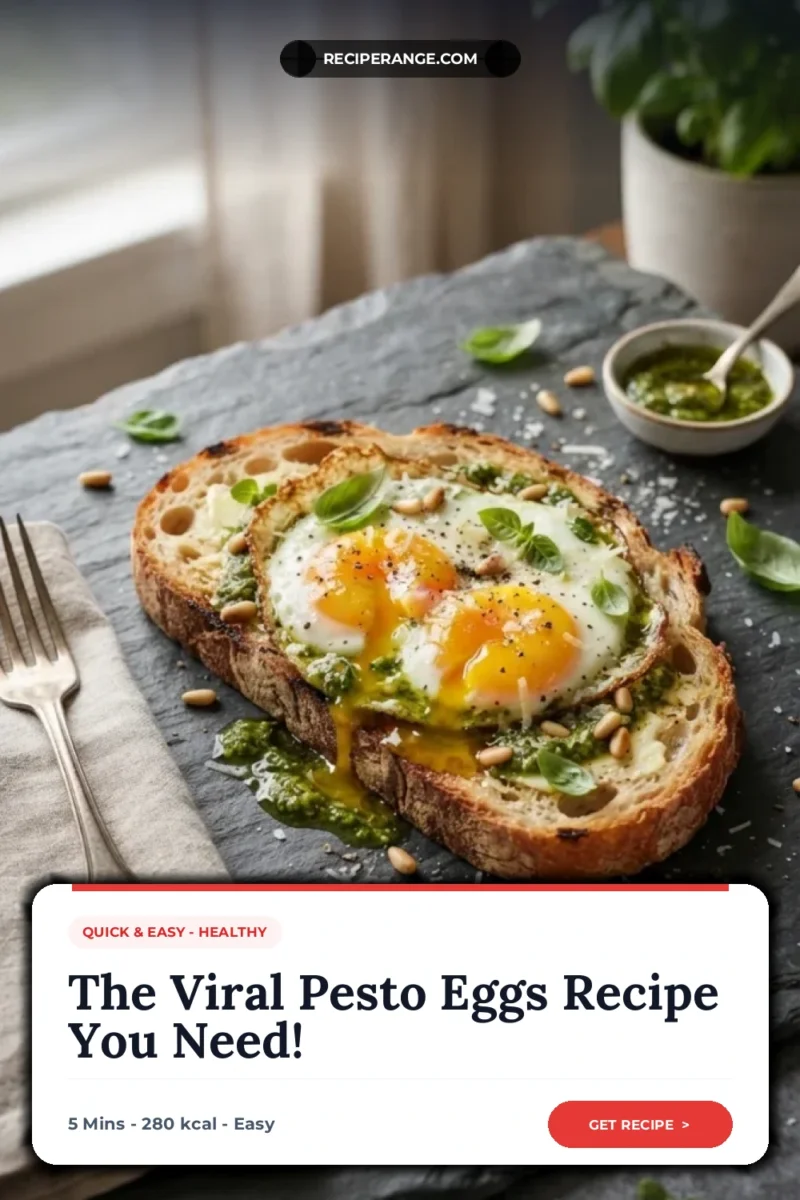

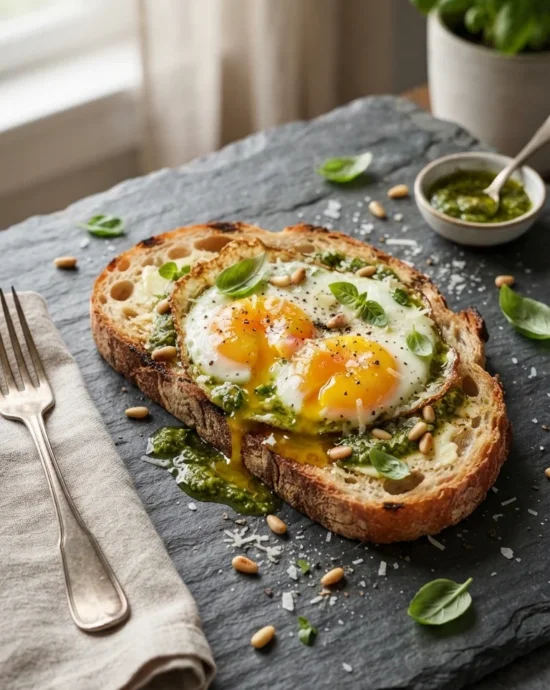

- Prep the Pan
Place a non-stick skillet over medium heat. Add the pesto and spread it evenly across the bottom of the pan until it begins to bubble.
- Crack the Eggs
Carefully crack the eggs directly into the pesto. Reduce the heat slightly if the pesto begins to brown too quickly.
- Fry to Perfection
Cook for 3-4 minutes. Use a spoon to gently baste the whites with the hot pesto oil, ensuring they are fully opaque and cooked through.
- Season & Serve
Once the whites are set but the yolk is still soft, remove from heat. Garnish with red pepper flakes and sea salt. Serve immediately over toasted sourdough.
- Calories:280 kcal
- Protein:14 g
- Total Fat:22 g
- Saturated Fat:4 g
- Cholesterol:370 mg
- Sodium:320 mg
- Potassium:180 mg
- Total Carbohydrates:4 g
- Dietary Fiber:1 g
- Sugars:1 g
- Calcium:60 mg
- Iron:1.2 mg
There is a symphony that happens in a hot skillet when herbaceous, oil-rich pesto meets the delicate protein of a farm-fresh egg. As the pesto hits the pan, the aroma of toasted garlic, basil, and pine nuts fills the kitchen, instantly waking up the senses. The oil sizzles, creating a lacey, crispy edge around the white of the egg, while the yolk remains a vibrant, velvety masterpiece waiting to be breached.
This isn’t just another breakfast trend; it is a masterclass in texture and flavor balance. The golden crust offers a satisfying crunch that contrasts beautifully with the rich, creamy yolk, making every bite feel like a culinary indulgence. Whether you are fueling up for a busy workday or treating yourself to a slow weekend brunch, these pesto eggs elevate the humble breakfast to restaurant-quality heights.
The Story & Culinary Inspiration Behind This Dish
The ‘Pesto Egg’ phenomenon took the digital culinary world by storm, representing a modern shift toward flavor-forward, low-effort cooking. At its core, it relies on the science of frying in infused oils. By replacing traditional butter or neutral oil with a high-quality pesto, you are essentially poaching the egg in a concentrated emulsion of herbs and lipids. This technique imparts deep, complex umami notes directly into the structure of the egg white, transforming a simple ingredient into a Mediterranean-inspired delicacy.
Why You'll Fall in Love with This Recipe
- Sensory Balance: Crispy, pesto-infused edges meet a molten, luxurious yolk.
- Nutrient Rich: Packed with high-quality protein and heart-healthy monounsaturated fats.
- Efficiency: Zero complex prep and a one-pan cleanup for busy mornings.
Health Benefits & Dietary Highlights
- Complete Protein: Eggs provide all nine essential amino acids necessary for muscle repair.
- Antioxidant Boost: Pesto, typically made with basil and garlic, is rich in flavonoids and polyphenols.
- Sustained Satiety: The combination of protein and healthy fats keeps blood sugar stable for hours.
Key Ingredients & Smart Substitutions
- The Pesto: Use a high-quality jarred variety or fresh homemade for the best flavor profile.
- The Eggs: Pasture-raised eggs offer a richer, more vibrant yolk for better texture.
- The Finish: A sprinkle of flaky sea salt or chili flakes adds the final layer of sophistication.
Detailed Step-by-Step Cooking Walkthrough
- 1. Pan Heat: Heat a non-stick skillet over medium heat and add 2 tablespoons of high-quality pesto.
- 2. Crack & Fry: Gently crack eggs into the bubbling pesto and allow the edges to crisp up.
- 3. Baste & Serve: Tilt the pan to baste the whites with the warm oil until set, keeping the yolk runny.
Critical Do's and Don'ts for Foolproof Success
- ✅ DO: Use Non-Stick: A high-quality non-stick pan is mandatory for the perfect lacey egg edges.
- ❌ DON'T: Burn the Garlic: Keep the heat at medium; if the pesto starts to smoke, it is too hot.
- ✅ DO: Use Fresh Pesto: The quality of the oil in your pesto directly dictates the flavor of the final dish.
- ❌ DON'T: Overcook the Yolk: Pull the pan off the heat while the yolk is still jiggling for a perfect dip-ready texture.
How to Store, Freeze & Reheat Without Losing Quality
- Storage: Pesto eggs are best enjoyed immediately. They do not store well due to the delicate yolk.
- Reheating: Not recommended; the texture of the white will become rubbery if reheated.
Delicious Serving Suggestions & Wine/Side Pairings
- Breads: Serve atop toasted sourdough or a rustic baguette to soak up the leftover pesto oil.
- Sides: A side of sliced avocado or a handful of fresh arugula adds brightness.
- Beverage: A strong Americano or a crisp, chilled grapefruit juice.
Chef's Pro Secrets for Restaurant-Quality Flavor
- The Secret Crunch: Add a pinch of parmesan cheese to the edges of the pan while frying for an extra crispy crust.
- Temperature Control: If the pesto is too thick, add a teaspoon of olive oil to loosen it before adding the eggs.
- Seasoning: Pesto is salty; taste before adding extra salt to avoid over-seasoning.
Frequently Asked Questions (FAQ)
Can I use vegan pesto?
Yes, ensure it is oil-based for the best frying results.
How do I get the whites to cook faster?
Place a lid on the pan for 30 seconds to steam the whites without overcooking the yolk.
What eggs work best?
Large, room-temperature eggs provide the most consistent cooking results.