

- Filling Assembly
In a large bowl, combine the diced beef, potatoes, rutabaga, and onions. Season liberally with salt and plenty of black pepper. Mix thoroughly.
- Rolling the Dough
Roll the pastry dough into 8-inch circles. Place a generous mound of the filling in the center of each circle.
- Sealing
Moisten the edges of the dough with water, fold over to form a half-moon, and crimp the edges tightly to seal.
- Baking
Place on a parchment-lined baking sheet. Brush with egg wash and cut three small slits in the top. Bake at 400°F for 25 minutes, then reduce to 350°F and bake for another 20 minutes until golden.
- Cooling
Remove from the oven and let rest for 10 minutes before serving to allow the internal juices to settle.
- Calories:380 kcal
- Protein:42 g
- Total Fat:18 g
- Saturated Fat:6 g
- Cholesterol:115 mg
- Sodium:480 mg
- Potassium:520 mg
- Total Carbohydrates:6 g
- Dietary Fiber:2 g
- Sugars:3 g
- Calcium:120 mg
- Iron:2.4 mg
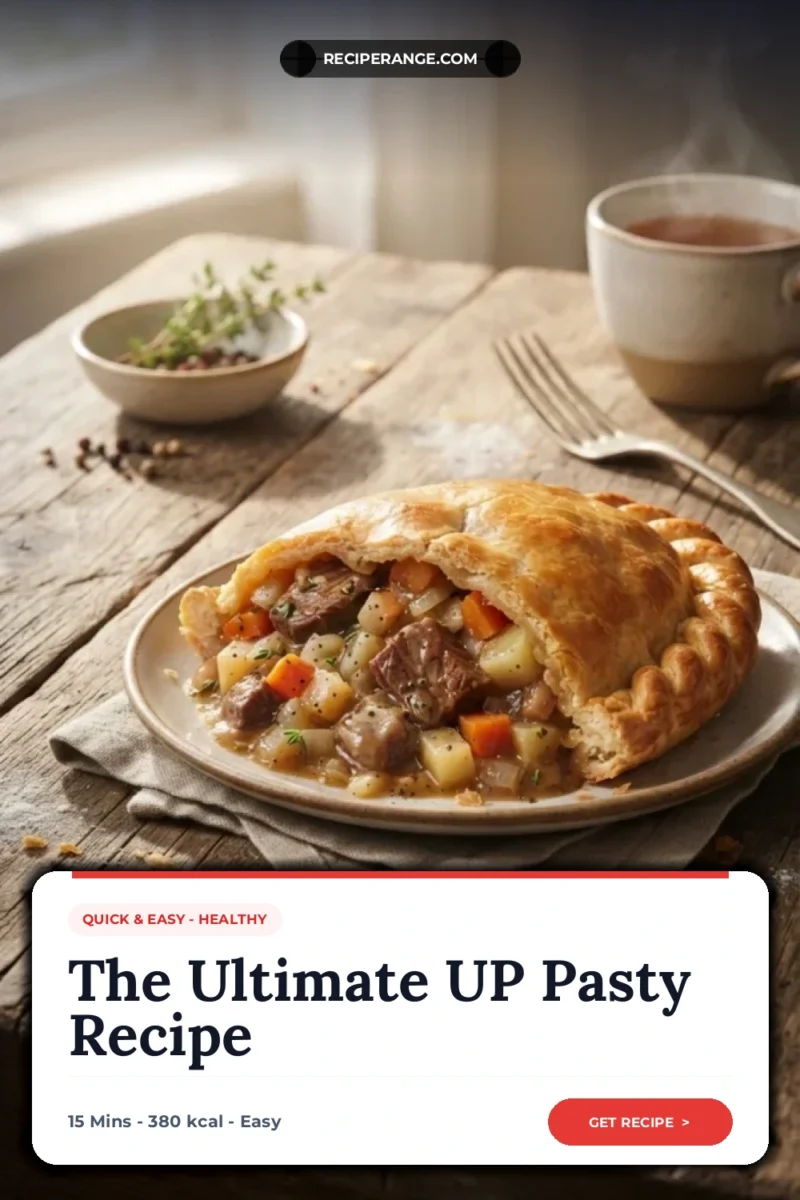
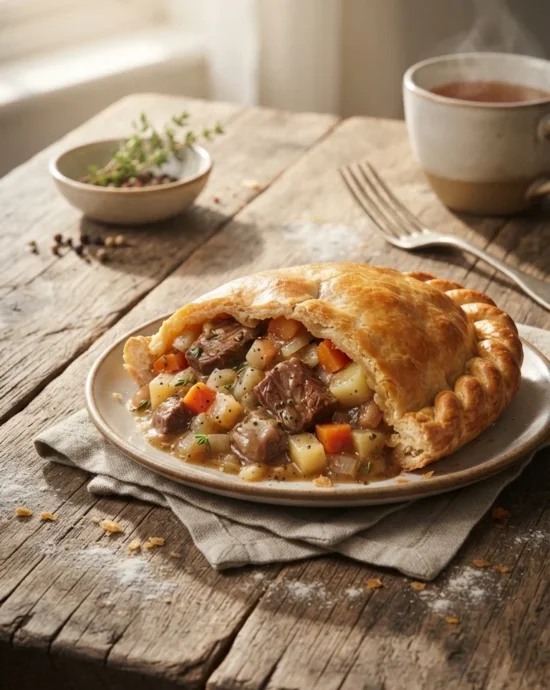
There is something profoundly comforting about the scent of a golden, butter-brushed pasty emerging from the oven. As you slice into the crimped, flaky crust, a plume of aromatic steam rises, carrying the earthy perfume of slow-roasted beef, rutabaga, and onions. It is a sensory experience that feels like a warm embrace on a chilly afternoon—an authentic taste of the rugged American Northwoods.
The initial crunch of the pastry yields to a succulent, tender interior that has been allowed to steam in its own juices. This isn’t just a hand pie; it is a culinary masterpiece of temperature and texture, where the starch of the potato and the subtle sweetness of the rutabaga meld perfectly with the savory depth of the seasoned meat. It is simple, humble, and utterly transformative.
The Story & Culinary Inspiration Behind This Dish
The pasty, a staple of Michigan’s Upper Peninsula, arrived in the mid-19th century with Cornish miners who migrated to work in the iron and copper mines. Designed as the ultimate ‘miner’s lunch,’ the pasty was built to be portable, durable, and nutritious. The iconic thick, crimped edge—often called the ‘handle’—allowed miners to hold their lunch with dirty, soot-covered hands and discard the crust afterward without wasting the meal inside.
From a flavor science perspective, the pasty thrives on the ‘slow-steam’ method. By encasing the raw ingredients within the dough, the moisture released during cooking creates a self-contained environment where the flavors of the meat and vegetables marry into a rich, savory gravy. It is a brilliant example of early functional food, engineered for endurance and sustained energy.
Why You'll Fall in Love with This Recipe
- Sensory Balance: Crispy golden exterior paired with a juicy, succulent, and savory interior.
- Nutrient Rich: High in bioavailable lean protein, complex carbohydrates, and root vegetable minerals.
- Cultural Heritage: A genuine taste of American culinary history that brings rustic tradition to your modern table.
Health Benefits & Dietary Highlights
- Sustained Energy: Complex carbs from potatoes and rutabaga provide slow-burning fuel, preventing blood sugar spikes.
- Hearty Nutrition: The combination of lean beef and root vegetables offers a high-protein, iron-rich meal that supports muscle recovery.
- Wholesome Ingredients: Minimal processing and simple, garden-fresh vegetables ensure a clean, nutrient-dense profile.
Key Ingredients & Smart Substitutions
- The Crust: A high-fat, buttery dough is essential; use chilled lard or butter for the signature flaky texture.
- The Filling: A traditional trifecta of diced beef (or steak), potatoes, and rutabaga provides the classic texture profile.
- Flavor Highlights: Generous amounts of cracked black pepper and kosher salt are mandatory to balance the mild sweetness of the root vegetables.
Detailed Step-by-Step Cooking Walkthrough
- 1. Prepare the Filling: Dice beef, potatoes, and rutabaga into uniform 1/4-inch cubes to ensure even cooking.
- 2. Roll the Dough: Roll out circles of pastry dough to about 1/8-inch thickness, keeping them chilled until the last second.
- 3. Assemble & Crimp: Pile the mixture into the center, fold over, and use a tight crimping motion to seal the edges completely.
- 4. Bake to Perfection: Bake until the crust reaches a deep golden brown and the internal juices are bubbling.
Critical Do's and Don'ts for Foolproof Success
- ✅ DO: Dice Small: Keep the cubes small so they cook through simultaneously with the pastry.
- ❌ DON'T: Overstuff: Avoid overfilling the crust, or it will burst during the baking process.
- ✅ DO: Egg Wash: Always brush the exterior with a beaten egg for that professional, glossy golden finish.
- ❌ DON'T: Skip the Venting: Always poke a few small holes in the top to allow steam to escape so the crust doesn't become soggy.
How to Store, Freeze & Reheat Without Losing Quality
- Refrigeration: Store in an airtight container for up to 3 days.
- Freezing: Freeze unbaked pasties on a tray, then transfer to a freezer bag for up to 2 months.
- Reheating: Reheat in a 350°F oven for 15 minutes to restore the crispy texture of the crust.
Delicious Serving Suggestions & Wine/Side Pairings
- Traditional Side: A side of beef gravy for dipping or a dollop of spicy brown mustard.
- Fresh Sides: A crisp cabbage slaw or pickled beets provide a bright acidic contrast to the rich pastry.
- Beverage: A robust dark stout or a crisp, cold ginger ale.
Chef's Pro Secrets for Restaurant-Quality Flavor
- The Rutabaga Factor: Do not skip the rutabaga; it is the soul of the traditional UP pasty and provides an essential earthy sweetness.
- Cold Ingredients: Keep your butter and water ice-cold when making the dough to ensure maximum flakiness.
- Seasoning: Be aggressive with the black pepper; the filling relies on it to cut through the richness of the pastry.
Frequently Asked Questions (FAQ)
Can I use store-bought pie crust?
Yes, it is a great time-saver, though homemade lard crusts are more authentic.
Should I precook the meat?
No, the beauty of the pasty is that the beef cooks slowly within the dough, creating its own flavorful juices.
How do I know when it's done?
The crust should be golden brown and firm to the touch.