

- Prep the Roti
Take the cooked godamba rotis, stack them, and slice them into thin strips. Then, cut across the strips to create bite-sized mosaic pieces.
- Heat the Griddle
Place a large heavy wok, cast-iron skillet, or flat griddle over high heat until smoking hot. Add the coconut oil and swirl to coat the surface.
- Sauté Aromatics
Toss in the sliced red onions, minced garlic, ginger, fresh curry leaves, and green chilies. Stir-fry vigorously for 60-90 seconds until fragrant and lightly charred.
- Add Veggies & Protein
Add the shredded cabbage or leeks and diced cooked chicken thighs. Toss continuously for 2 minutes until the vegetables begin to soften.
- Scramble Eggs
Push the vegetable and meat mixture to the sides of the pan to create a well in the center. Crack the eggs directly into the well, let them set for 15 seconds, then scramble softly.
- Incorporate Roti & Spices
Add the chopped roti pieces into the pan. Sprinkle the Sri Lankan roasted curry powder, chili flakes, and salt evenly over the top.
- Toss and Chop
Pour in the chicken curry gravy. Using two metal spatulas in a chopping and folding motion, vigorously blend all ingredients together over high heat for 3-4 minutes until the roti absorbs the flavors and develops light golden crispy edges.
- Serve Hot
Transfer immediately to a warm serving platter, garnish with freshly chopped cilantro or scallions, and serve alongside a bowl of extra curry gravy.
- Calories:520 kcal
- Protein:28 g
- Total Fat:22 g
- Saturated Fat:8 g
- Cholesterol:165 mg
- Sodium:640 mg
- Potassium:340 mg
- Total Carbohydrates:52 g
- Dietary Fiber:4 g
- Sugars:5 g
- Calcium:65 mg
- Iron:3.1 mg
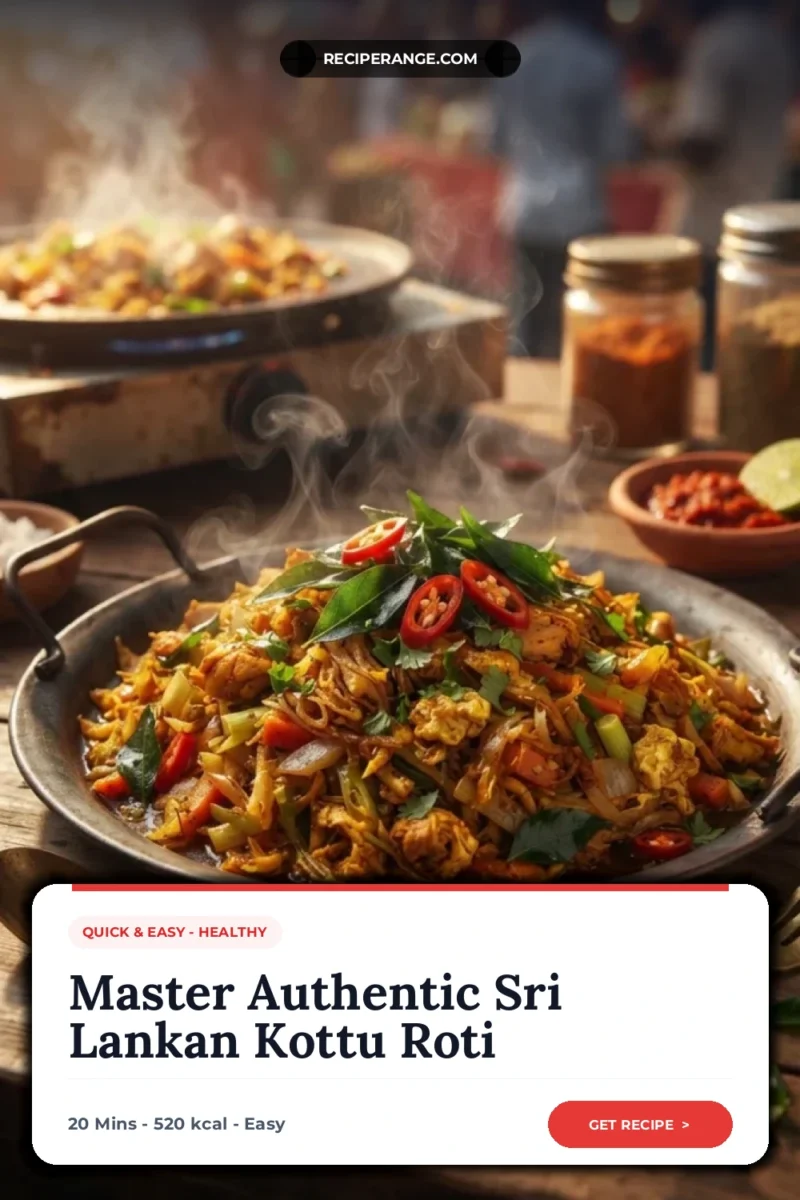
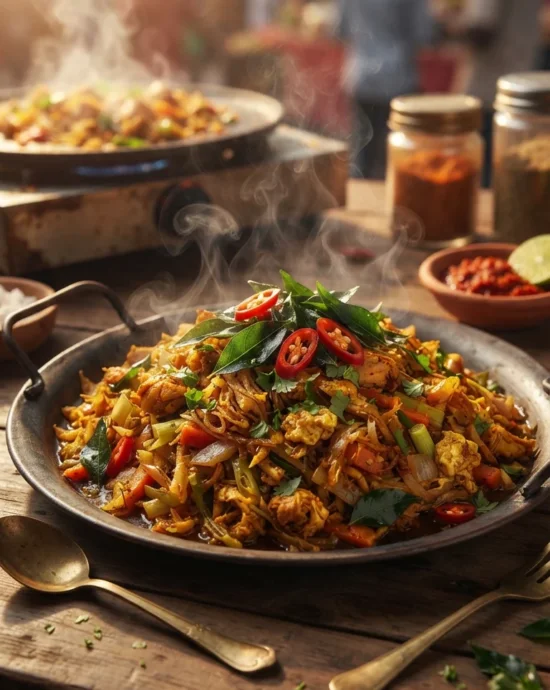
Step into the vibrant, sensory-loaded culinary landscape of Sri Lanka with a dish that captures the literal heartbeat of the island nation’s street food culture. As you approach a kottu stall on a balmy Colombo evening, the first thing that strikes you is not just the rich, curry-infused aroma of toasted spices and sizzling onions, but the unmistakable rhythm. The heavy clang of two steel blades striking a seasoned iron griddle rings out in syncopated beats, chopping and tossing shredded flatbread, vegetables, eggs, and succulent meats into a glorious, harmonious tangle.
When you take your first bite of homemade Kottu Roti, your palate is instantly awakened by a symphony of textures and bold flavors. The outer edges of the crispy roti absorb the deeply savory curry sauce while retaining a delightful chew, mingling seamlessly with tender ribbons of cabbage, scallions, and perfectly cooked protein. It is comfort food at its most electrifying—fiery, aromatic, intensely satisfying, and utterly addictive. Bringing this iconic street food masterpiece into your own kitchen transforms a regular weeknight dinner into an unforgettable feast.
Rooted in the coastal towns of Sri Lanka—specifically popularized in the Tamil-majority city of Batticaloa before spreading nationwide—Kottu Roti is more than a meal; it is a cultural phenomenon. Traditionally crafted using leftover godamba roti (a thin, flaky flatbread), the dish repurposes pantry staples into culinary gold through sheer ingenuity and high-heat technique. Whether you are seeking a weekend culinary project or an energizing dinner packed with complex flavors, mastering kottu connects you directly to the warmth and generosity of Sri Lankan hospitality.
The Story & Culinary Inspiration Behind This Dish
The history of Kottu Roti is a brilliant testament to resourceful street food culture. Originating in the late 20th century, ingenious local cooks sought a way to utilize day-old, hardened godamba roti rather than letting it go to waste. By chopping the flatbread finely on a griddle and tossing it with available curry gravies, vegetables, eggs, and meats, they birthed a legendary dish. The distinct ‘kottoo-kottoo’ sound of the metal blades chopping against the iron plate gave the dish its onomatopoeic name. Today, it represents the ultimate fusion of Sri Lankan spice heritage and communal street dining.
Why You'll Fall in Love with This Recipe
- Unmatched Texture: A brilliant interplay of crispy flatbread edges, tender meat, and perfectly soft vegetables.
- Bold Aromatics: Infused with authentic Sri Lankan curry powder, roasted mustard seeds, and fresh curry leaves.
- Interactive & Fun: The energetic tossing and chopping process makes cooking an engaging culinary adventure.
Health Benefits & Dietary Highlights
- Complete Nutrition: Combines high-quality protein from eggs and chicken with fiber-dense vegetables.
- Metabolic Spices: Features turmeric, black pepper, and chili, known to support thermogenesis and anti-inflammatory pathways.
- Sustained Energy: Complex carbohydrates from whole-grain or traditional flatbreads provide steady fuel.
Key Ingredients & Smart Substitutions
- Godamba Roti or Paratha: The textural foundation; provides the essential chewy base that absorbs the rich spiced gravy.
- Curry Leaves & Pandan: The indispensable aromatic trinity of Sri Lankan cooking, lending unmistakable herbal depth.
- Sri Lankan Roasted Curry Powder: Dark-roasted spices that provide a uniquely earthy, complex warmth unlike standard yellow curry powders.
Detailed Step-by-Step Cooking Walkthrough
- 1. Chop the Roti: Slice layered godamba roti or paratha into thin strips and roughly chop into bite-sized pieces.
- 2. Sauté Aromatics: Flash-fry onions, green chilies, garlic, ginger, and fresh curry leaves in a smoking-hot wok or skillet.
- 3. Scramble & Combine: Push aromatics aside, crack eggs directly into the pan, scramble softly, and fold in protein.
- 4. Toss & Chop: Add the chopped roti and curry sauce, tossing vigorously over high heat until fully absorbed and lightly crisped.
Critical Do's and Don'ts for Foolproof Success
- ✅ DO: Use High Heat: A scorching hot wok or heavy cast-iron skillet is essential to achieve authentic street-style char.
- ❌ DON'T: Use Soggy Roti: Ensure your flatbread is slightly dry or lightly toasted beforehand so it doesn't turn to mush.
- ✅ DO: Incorporate Fresh Curry Leaves: Do not omit fresh curry leaves; they are the soul of authentic Sri Lankan flavor profiles.
- ❌ DON'T: Overcrowd the Pan: Cook in batches if your pan is too small to ensure proper searing rather than steaming.
How to Store, Freeze & Reheat Without Losing Quality
- Refrigeration: Store leftover kottu in an airtight container for up to 2 days. Note that the roti will soften further.
- Freezing: Not recommended for freezing due to the delicate texture of the stir-fried flatbread and eggs.
- Reheating: Reheat briskly in a very hot skillet with a splash of chicken stock or oil to revive the crispy edges.
Delicious Serving Suggestions & Wine/Side Pairings
- Cooling Sides: Traditional Lunu Miris (onion relish) or a fresh cucumber-yogurt raita to balance the spice.
- Extra Protein: A side of deviled cashews or crisp chicken wings.
- Beverage: A cold, crisp King Coconut water or iced Ceylon milk tea.
Chef's Pro Secrets for Restaurant-Quality Flavor
- The Chopping Technique: Use two sturdy metal spatulas like drumsticks to chop and toss the roti against the pan edges.
- Sauce Balance: Keep a small bowl of chicken curry gravy on hand to moisten the dish if it begins to dry out.
- Spice Level: Adjust the dried chili flakes and green chilies to match your personal heat tolerance.
Frequently Asked Questions (FAQ)
Can I use store-bought tortillas if I can't find roti?
While godamba roti is authentic, flour tortillas or parathas make a wonderful, convenient substitute.
Is Kottu Roti very spicy?
It has a noticeable kick, but you can easily control the heat by reducing the green chilies and chili flakes.
Can I make this vegetarian?
Absolutely! Omit the meat and load it up with mushrooms, carrots, leeks, and extra eggs or firm tofu.