

- Preparation & Soaking
In a large bowl, wash the rice and fenugreek seeds together 3-4 times until the water runs clear. In a separate bowl, wash the urad dal. Soak both in plenty of water for 5-6 hours. Soak the poha separately 30 minutes before grinding.
- Grinding the Batter
Drain the urad dal and grind it first in a high-speed blender or stone grinder using ice-cold water (added tablespoon by tablespoon) until it is light, fluffy, and voluminous. Remove and set aside. Grind the rice and poha together into a slightly grainy, silky paste. Combine both batters in a large pot, ensuring there is enough room for expansion.
- The Fermentation Phase
Mix the batter well with your hands (the natural heat and bacteria from your hands actually aid fermentation). Cover and leave in a warm, dark place for 8-12 hours. Once fermented, the batter should be bubbly and have a mild sourdough aroma. Add salt and a splash of water to reach a pouring consistency.
- Preparing the Potato Masala
Heat 1 tbsp oil in a pan. Add mustard seeds; once they pop, add urad dal (optional crunch), curry leaves, green chilies, and sliced onions. Sauté until onions are translucent. Add turmeric and salt. Fold in the roughly mashed potatoes and a splash of water to keep it moist. Finish with fresh coriander and set aside.
- The Art of the Dosa
Heat a cast-iron tawa on medium-high. Test the heat with a splash of water; it should dance and evaporate instantly. Wipe dry. Pour a ladle of batter in the center. Using the back of the ladle, spread in a spiral motion from the center outward to form a thin circle. Drizzle 1 tsp ghee around the edges.
- The Golden Finish
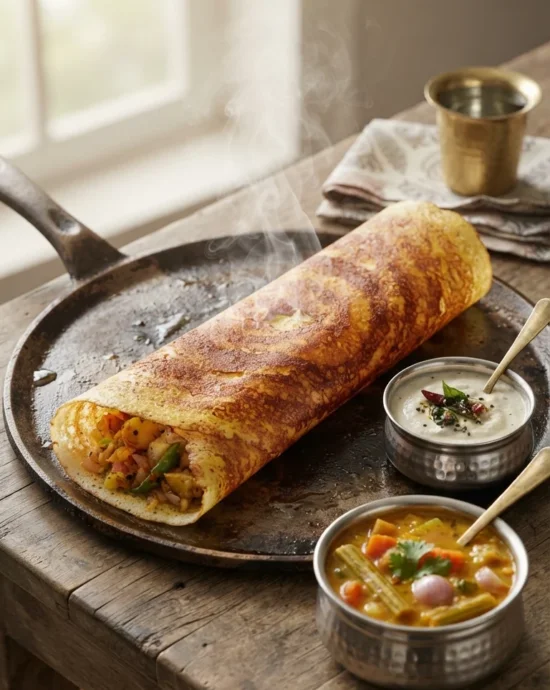
Cook until the bottom turns a deep uniform golden brown and the edges lift naturally. Do not flip. Place 2-3 tbsp of the potato masala in the center. Fold the dosa into a cylinder or a triangle. Serve immediately with coconut chutney and sambar.
- Calories:345 kcal
- Protein:8 g
- Total Fat:12 g
- Saturated Fat:5 g
- Cholesterol:15 mg
- Sodium:510 mg
- Potassium:380 mg
- Total Carbohydrates:52 g
- Dietary Fiber:4 g
- Sugars:2 g
- Calcium:45 mg
- Iron:2.1 mg
Imagine the rhythmic ‘hiss’ as a splash of cool water hits a scorching iron tawa, followed by the mesmerizing circular sweep of a ladle spreading ivory-colored batter into a translucent, lace-like disc. As the heat penetrates the fermented rice and lentil base, the nutty aroma of toasted grains begins to rise, mingling with the rich, clarified scent of molten ghee. Within seconds, the edges begin to curl upwards, revealing a complex, mahogany-gold underbelly that promises a shatter-crisp texture. This is the Masala Dosa in its truest form—not just a meal, but a sensory performance that defines the culinary soul of South India. The first bite offers a symphonic contrast: the sharp, tangy crunch of the fermented crepe yielding to the soft, earthy, and turmeric-stained warmth of the potato ‘palya’ tucked inside. It is a dish that balances the elements of fire, fermentation, and fragrance with surgical precision.
At RecipeRange.com, we believe that a truly great Masala Dosa is a labor of love that begins long before the stove is lit. It is found in the meticulous soaking of short-grain rice and de-husked black gram, the patient grind to a silky consistency, and the overnight vigil as wild yeasts transform the batter into a bubbly, probiotic powerhouse. Whether you are enjoying this as a sunrise breakfast in a bustling Bengaluru ‘darshini’ or preparing it in your own kitchen, the Masala Dosa represents the pinnacle of Indian vegetarian craftsmanship. In this guide, we will deconstruct the science of the perfect fermentation, the geometry of the spread, and the aromatic layering of the tempering to ensure your home-cooked version rivals the legendary heritage hotels of Mysore.
The Story & Culinary Inspiration Behind This Dish
The Masala Dosa is a culinary icon with roots deeply embedded in the temple towns of Karnataka, specifically Udupi. While the plain ‘Dosa’ has been mentioned in Sangam literature as early as the 6th century, the ‘Masala’ variation is a relatively modern stroke of genius. Legend has it that the potato filling was born out of a creative solution to avoid wasting leftover potato stir-fry, cleverly hidden inside the dosa to bypass certain social dietary restrictions of the time. Over the decades, it evolved from a humble snack to a global ambassador of Indian cuisine.
From a flavor science perspective, the Masala Dosa is a masterclass in the Maillard reaction and fermentation. The fermentation process breaks down complex starches into simpler sugars and organic acids, which not only provides the signature tang but also facilitates the beautiful browning (caramelization) when the batter hits the heat. The addition of a small amount of fenugreek seeds (methi) is crucial; it contains mucilage that aids in the batter’s elasticity and provides a subtle bitterness that cuts through the richness of the ghee. The potato filling, or ‘Aloo Bhaji,’ utilizes a ‘tadka’ (tempering) technique where mustard seeds and curry leaves are bloomed in hot oil to release fat-soluble essential oils, creating a deep, resonant flavor profile that acts as the heart of the dish.
Why You'll Fall in Love with This Recipe
- Textural Contrast: The ultimate interplay between a paper-thin, glass-crisp exterior and a pillowy, spiced potato interior.
- Probiotic Power: Naturally fermented batter promotes gut health and increases the bioavailability of essential nutrients.
- Flavor Harmony: A perfect balance of tangy fermented rice, earthy lentils, pungent mustard seeds, and aromatic curry leaves.
Health Benefits & Dietary Highlights
- Complete Protein Profile: The combination of rice and lentils creates a complete amino acid profile, essential for muscle repair.
- Easy Digestibility: Fermentation breaks down lectins and phytates, making the grains much easier on the digestive system.
- Natural Energy Boost: Rich in complex carbohydrates and B-vitamins, providing sustained energy without the sugar crash.
Key Ingredients & Smart Substitutions
- The Grains: Sona Masuri rice and Urad Dal (black gram) provide the structural integrity and protein base.
- The Fermentation Catalyst: Fenugreek seeds (methi) introduce natural yeasts and ensure a bubbly, light batter.
- The Aromatic Base: Fresh curry leaves, mustard seeds, and green chilies form the 'tadka' that flavors the potato filling.
Detailed Step-by-Step Cooking Walkthrough
- 1. Soak & Grind: Soak rice and lentils separately for 6 hours, then grind into a silky-smooth batter with minimal water.
- 2. Fermentation: Allow the batter to rest in a warm spot for 8-12 hours until it doubles in volume and smells slightly tangy.
- 3. Potato Masala: Boil potatoes and sauté them with tempered mustard seeds, onions, turmeric, and fresh ginger.
- 4. The Spread: Pour batter onto a seasoned tawa, spread in concentric circles, drizzle with ghee, and cook until golden brown.
Critical Do's and Don'ts for Foolproof Success
- ✅ DO: Check Battery Consistency: The batter should be 'pouring' consistency, similar to heavy cream; too thick and it won't spread, too thin and it won't crisp.
- ❌ DON'T: Use Non-Stick Only: While non-stick works, a seasoned cast-iron tawa provides a superior, more authentic crust and heat distribution.
- ✅ DO: Maintain Tawa Temp: Sprinkle water on the tawa between each dosa to bring the surface temperature down, ensuring the next one spreads smoothly.
- ❌ DON'T: Rush Fermentation: Never skip the 8-hour rest; without fermentation, you lose the characteristic tang and the ability to achieve a golden-brown finish.
How to Store, Freeze & Reheat Without Losing Quality
- Batter Storage: Fresh batter stays perfect in the refrigerator for up to 5 days. Do not salt the entire batch if storing.
- Potato Filling: Store the masala in an airtight container for 3 days. Reheat in a pan with a splash of water to restore moisture.
- Reheating Dosas: Cooked dosas are best fresh. If reheating, use a dry skillet over medium heat to regain some crispness. Avoid microwaves.
Delicious Serving Suggestions & Wine/Side Pairings
- Coconut Chutney: A fresh, cooling grind of coconut, roasted chana dal, and green chilies.
- Tiffin Sambar: A tangy lentil-based vegetable stew flavored with tamarind and a proprietary spice blend.
- Filter Coffee: Strong, frothy South Indian chicory-infused coffee served in a traditional brass dabarah and tumbler.
Chef's Pro Secrets for Restaurant-Quality Flavor
- The Rice Ratio: Use a mix of parboiled rice and raw rice (3:1) for the ultimate balance of softness and crunch.
- The Ghee Secret: For a restaurant-style finish, use a mix of 50% ghee and 50% oil when frying the dosa for flavor and high-heat stability.
- Onion Trick: Rub half an onion dipped in oil over the tawa before spreading the batter to create a natural non-stick surface.
Frequently Asked Questions (FAQ)
Why is my dosa sticking to the pan?
The pan is likely too hot or not seasoned well. Lower the heat and rub with an onion and oil before the next attempt.
My batter isn't fermenting, what do I do?
In cold climates, place the batter in an oven with the light on. The light provides just enough warmth (around 80°F) for the yeast.
Can I use store-bought batter?
Yes, but ensure it is fresh and not overly sour. Add a teaspoon of sugar to help with browning if needed.