


- Infuse the Dairy
In a medium heavy-bottomed saucepan, combine the heavy cream, whole milk, sugar, salt, and the lightly cracked espresso beans. Heat over medium heat until the mixture reaches a bare simmer (about 175°F). Remove from heat, cover with a tight-fitting lid, and let steep for exactly 60 minutes. This slow extraction pulls the aromatic oils without the acidic bite.
- Prepare the Liaison
While the dairy is steeping, place the 5 egg yolks in a large heat-proof bowl. Whisk vigorously until the yolks become pale yellow and slightly thickened. Set aside.
- Temper and Cook the Custard
After the hour of steeping, bring the dairy back to a simmer. Slowly drizzle 1/2 cup of the hot liquid into the egg yolks while whisking constantly. Once incorporated, pour the yolk mixture back into the saucepan. Cook over medium-low heat, stirring constantly with a heat-resistant spatula in a figure-eight motion. Monitor the temperature closely; remove from heat as soon as it reaches 170°F (77°C) and the mixture coats the back of a spoon.
- Strain and Chill
Immediately strain the custard through a fine-mesh sieve into a clean bowl set over an ice bath. This stops the cooking process and removes the coffee beans. Stir in the vanilla extract. Once cool to the touch, cover with plastic wrap (touching the surface) and refrigerate for a minimum of 12 hours, or up to 24 hours.
- Churn and Ripen
Pour the chilled custard into your ice cream maker and churn according to the manufacturer’s instructions (usually 20-25 minutes) until it reaches the consistency of soft-serve. Transfer to a chilled container and freeze for at least 4 hours to 'ripen' and firm up before serving.
- Calories:320 kcal
- Protein:5 g
- Total Fat:24 g
- Saturated Fat:14 g
- Cholesterol:185 mg
- Sodium:85 mg
- Potassium:160 mg
- Total Carbohydrates:22 g
- Dietary Fiber:g
- Sugars:20 g
- Calcium:110 mg
- Iron:0.6 mg
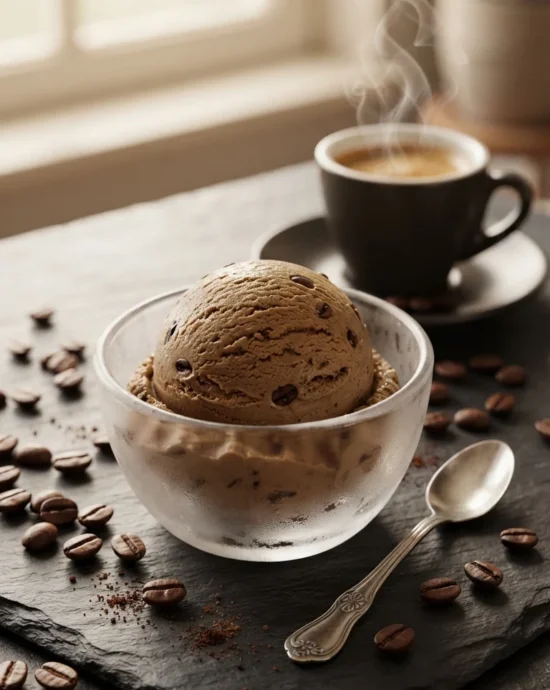
Imagine walking into a high-end Parisian café at dusk, where the scent of freshly pulled espresso mingles with the sweet, buttery aroma of simmering cream. That is the exact sensory experience captured in every spoonful of this artisanal Coffee Ice Cream. It isn’t just a frozen treat; it’s a masterclass in texture and temperature—a silky, dense custard that coats the tongue before dissolving into a bold, dark-roast finish. The first bite offers a cooling relief, followed immediately by the warming, complex notes of roasted Arabica beans, creating a sophisticated dance of bitter and sweet. The mouthfeel is transcendent—unbelievably smooth, devoid of icy crystals, and possessing that luxurious ‘chew’ characteristic of the finest French-style gelatos.
As an executive chef, I have spent years perfecting the ratio of butterfat to sugar to ensure a clean break on the palate. This recipe moves beyond the realm of simple snacks into the territory of culinary art, where the humble coffee bean is elevated to its highest, creamiest potential. Whether you’re enjoying it on a sweltering July afternoon or as a refined palate cleanser after a multi-course dinner, this recipe delivers a depth of flavor that instant coffee granules simply cannot replicate. We are utilizing a meticulous tempering process and a cold-steeping infusion that ensures the oils of the coffee beans are fully emulsified into the dairy, creating a uniform flavor profile that lingers elegantly without a trace of grittiness.
The Story & Culinary Inspiration Behind This Dish
The marriage of coffee and frozen dairy finds its roots in the 17th-century ‘Café Procope’ in Paris, where the first iterations of coffee-flavored ices were served to the Enlightenment’s greatest thinkers. However, the science of this dish is what truly fascinates the modern chef. Coffee contains over 800 aromatic compounds, many of which are fat-soluble. By steeping whole, lightly cracked espresso beans in a mixture of heavy cream and whole milk, we engage in a lipid-based extraction. This method is superior to using brewed coffee, which introduces excess water and leads to unwanted ice crystals. Historically, the transition from ‘water ices’ to ‘custard-based creams’ marked the evolution of ice cream into a luxury good. The addition of egg yolks—a hallmark of the French style—provides lecithin, a natural emulsifier that binds the coffee oils and dairy fats into a stable, velvet-like matrix. This recipe honors those traditional techniques while applying modern temperature controls to ensure a perfect result every time.
Why You'll Fall in Love with This Recipe
- Complex Flavor Profile: Utilizes whole-bean infusion for a 'clean' coffee taste that avoids the bitterness of over-extracted grounds.
- Superior Mouthfeel: The high egg-yolk count creates a dense, custard-like texture that resists melting and feels luxurious.
- Chef-Level Precision: Includes specific temperature benchmarks and tempering techniques used in Michelin-starred pastry kitchens.
Health Benefits & Dietary Highlights
- Antioxidant Powerhouse: Coffee is a primary source of polyphenols and hydrocinnamic acids which combat oxidative stress.
- Cognitive Enhancement: The natural caffeine content provides a gentle metabolic lift and improves focused alertness.
- Bioavailable Calcium: High-quality grass-fed dairy provides essential minerals for bone density and nerve function.
Key Ingredients & Smart Substitutions
- Whole Espresso Beans: The soul of the dish; use a medium-dark roast. Cracking them slightly releases oils without clouding the custard.
- High-Fat Dairy: A 2:1 ratio of heavy cream to whole milk ensures a butterfat content of approximately 18%, the gold standard for premium ice cream.
- Pasture-Raised Egg Yolks: Acts as the primary emulsifier, providing the signature golden hue and a rich, custardy finish.
Detailed Step-by-Step Cooking Walkthrough
- 1. Infusion: Steep cracked beans in hot dairy for 60 minutes to extract aromatic oils without bitterness.
- 2. Custard Base: Whisk yolks and sugar; slowly temper with hot dairy to create a stable emulsion.
- 3. Precision Thickening: Heat the mixture to exactly 170°F (77°C) until it coats the back of a spoon (nappe stage).
- 4. Cure & Churn: Chill the base for at least 12 hours to allow protein structures to stabilize before churning.
Critical Do's and Don'ts for Foolproof Success
- ✅ DO: Temper the Yolks: Add hot liquid to yolks in a slow, steady stream while whisking constantly to prevent scrambling.
- ❌ DON'T: Boil the Custard: Never let the mixture exceed 180°F, or the eggs will curdle and create a grainy texture.
- ✅ DO: Chill the Bowl: Ensure your ice cream maker's canister is frozen for at least 24 hours prior to use.
- ❌ DON'T: Rush the Ripening: Do not skip the overnight fridge rest; this 'aging' process is vital for the best texture.
How to Store, Freeze & Reheat Without Losing Quality
- Long-Term Storage: Store in a shallow, airtight container. Press a piece of parchment paper directly onto the surface to prevent ice crystals.
- Temperature Control: Keep at the back of the freezer (0°F/-18°C) rather than the door to avoid temperature fluctuations.
- Serving Prep: Tempering is key: let the container sit at room temperature for 5-7 minutes before scooping for the perfect consistency.
Delicious Serving Suggestions & Wine/Side Pairings
- Textural Contrasts: Serve with crushed chocolate-covered espresso beans or a warm, buttery almond biscotti.
- Grown-Up Sundae: Drizzle with a salted caramel reduction or a shot of warm Frangelico liqueur.
- Fruit Accents: Fresh raspberries or a balsamic cherry compote provide a bright acidity that cuts through the rich dairy.
Chef's Pro Secrets for Restaurant-Quality Flavor
- The Alcohol Trick: Add 1 tablespoon of vodka or coffee liqueur to the base; alcohol doesn't freeze, keeping the ice cream softer.
- Salt is Essential: A pinch of high-quality sea salt acts as a flavor bridge, making the coffee taste 'darker' and the sugar less cloying.
- Strain Twice: Use a fine-mesh chinois to strain the base twice—once after infusion and once after cooking—for ultimate smoothness.
Frequently Asked Questions (FAQ)
Can I use ground coffee instead of whole beans?
You can, but the ice cream will be greyish and potentially gritty. If using grounds, reduce steeping time to 5 minutes and use a coffee filter to strain.
How do I make this decaf?
Simply substitute with high-quality decaffeinated espresso beans; the flavor extraction process remains identical.
Why is my ice cream rock hard?
This usually happens if the base wasn't churned long enough or if the freezer is too cold. Adding a bit of invert sugar (like corn syrup) can help.