

- Activate Yeast
In a small bowl, combine warm water, sugar, and active dry yeast. Let sit for 5-10 minutes until frothy and active.
- Mix Batter
In a large mixing bowl, whisk together the fine rice flour and salt. Pour in the activated yeast mixture and thick coconut milk. Whisk thoroughly until completely smooth with no lumps.
- Ferment Batter
Cover the bowl tightly with a clean kitchen towel and store in a warm, draft-free spot for 4 to 6 hours (or overnight) until bubbly and pleasantly fermented.
- Heat the Hopper Pan
Place a traditional Sri Lankan hopper pan (appam chatti) over medium-high heat. Lightly grease the inner surface with a small brush dipped in coconut oil.
- Pour and Swirl
Pour a standard ladleful (about 1/3 cup) of fermented batter into the center of the hot pan. Immediately pick up the pan by its handles and swirl it in a circular motion so the batter coats the sloped sides, leaving a thicker pool at the bottom.
- Cover and Steam
Cover the pan immediately with a tight-fitting lid. Cook over medium heat for 2 to 3 minutes until the edges turn deep golden brown and crisp, while the center remains soft and spongy.
- Remove and Serve
Run a thin spatula gently around the rim to release the hopper. Lift it out carefully and serve hot with sambols and curries.
- Calories:210 kcal
- Protein:3 g
- Total Fat:9 g
- Saturated Fat:8 g
- Cholesterol:mg
- Sodium:190 mg
- Potassium:140 mg
- Total Carbohydrates:30 g
- Dietary Fiber:2 g
- Sugars:3 g
- Calcium:15 mg
- Iron:1.1 mg
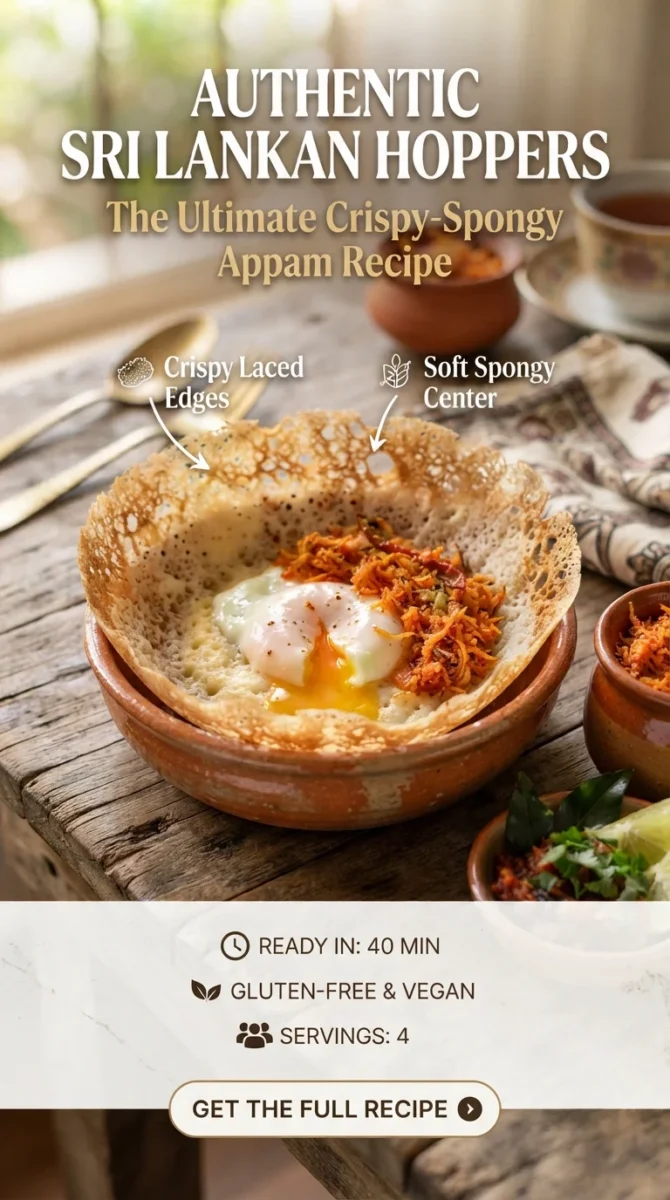
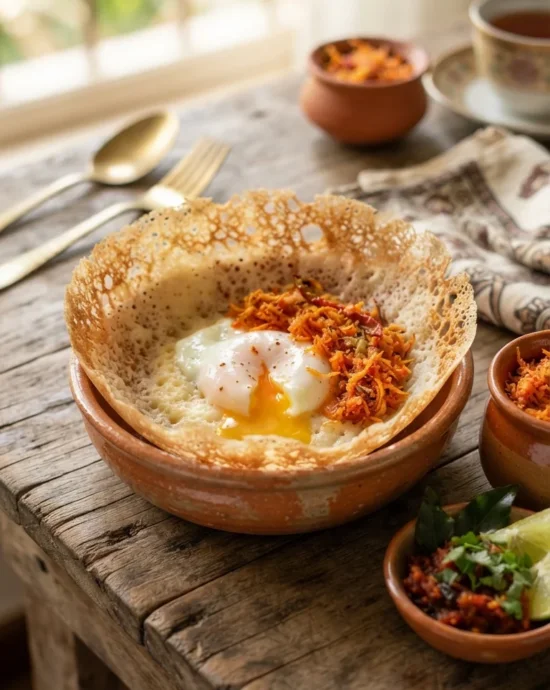
Step into the vibrant spice markets of Colombo and experience the magnetic, inviting aroma of freshly baked Sri Lankan hoppers. Also known locally as appam, these bowl-shaped fermented pancakes offer a mesmerizing textural contrast: a razor-thin, shatteringly crisp lace-like rim that melts instantly on the tongue, giving way to a spongy, tender, slightly tart center. As the batter hits the smoking-hot, curved hopper pan—tradically called a *thachchiya*—it sizzles furiously, bubbling up into a magnificent edible vessel designed to cradle savory onion sambols, spicy meat curries, or a perfectly runny poached egg.
Crafting authentic hoppers is a revered culinary art form rooted in patience, precise fermentation, and temperature control. Whether you are seeking a comforting weekend breakfast or an unforgettable centerpiece for a South Asian feast, mastering this foundational Sri Lankan delicacy unlocks a world of ancient aromatic heritage. The gentle tang of fermented toddy or yeast blends with the rich, unctuous creaminess of fresh coconut milk, creating a flavor profile that is deeply comforting yet refreshingly complex.
The Story & Culinary Inspiration Behind This Dish
Appam hold a cherished place in Sri Lankan culinary history, deeply influenced by centuries of spice trading, colonial interactions, and indigenous South Asian traditions. Originally brought to the island’s shores by ancient traders and settlers from Southern India, hoppers evolved uniquely within Sri Lankan home kitchens. The incorporation of coconut milk—abundant across the tropical island—transformed the batter into a richer, more fragrant iteration than its mainland counterparts. Traditionally fermented overnight using palm wine (toddy) to achieve a natural leavening and characteristic lactic acid tang, modern adaptations rely on active dry yeast or baking soda to recreate that signature airy texture and subtle sour complexity.
Why You'll Fall in Love with This Recipe
- Unmatched Textural Harmony: Shattering crisp edges meet a pillowy, soft, spongy center in every single bite.
- Naturally Plant-Based: Inherently dairy-free and vegan-friendly, relying on wholesome coconut milk and rice flour.
- Endless Versatility: Equally delicious served plain, paired with fiery chili sambols, or crowned with a soft egg.
Health Benefits & Dietary Highlights
- Gut-Friendly Fermentation: The natural fermentation process breaks down starches, making the batter gentle and easy to digest.
- Heart-Healthy Fats: Rich coconut milk provides medium-chain triglycerides (MCTs) that support sustained cellular energy.
- Naturally Gluten-Free: Crafted exclusively from rice flour, offering a safe, easily digestible bread alternative for sensitive diets.
Key Ingredients & Smart Substitutions
- Rice Flour: Forms the structural base; use fine-milled hopper flour or superfine white rice flour for optimal crispness.
- Coconut Milk: Provides rich moisture, subtle natural sweetness, and helps achieve the golden caramelized edges.
- Active Yeast & Sugar: Drives the overnight or warm fermentation, producing essential carbon dioxide bubbles and a delicate tang.
Detailed Step-by-Step Cooking Walkthrough
- 1. Whisk Batter: Combine rice flour, coconut milk, warm water, yeast, sugar, and a pinch of salt into a smooth, pourable batter.
- 2. Ferment: Cover and let the batter rest in a warm place until light, frothy, and slightly fermented.
- 3. Swirl & Cook: Heat a greased hopper pan, pour in a ladle of batter, and swirl quickly to coat the curved sides.
- 4. Steam & Crisp: Cover with a tight-fitting lid, cooking until the edges are deep golden and crisp while the center remains soft.
Critical Do's and Don'ts for Foolproof Success
- ✅ DO: Swirl Vigorously: Swirl the hopper pan immediately upon pouring so the batter evenly coats the sloped sides to form the lace rim.
- ❌ DON'T: Overfill the Pan: Pour only a small ladle of batter; too much batter prevents the signature thin, crispy bowl shape.
- ✅ DO: Keep the Pan Seasoned: Lightly oil and wipe the hopper pan between each bake to prevent sticking and ensure effortless release.
- ❌ DON'T: Skip the Fermentation: Allow adequate resting time so the natural yeast action creates the essential airy, spongy center.
How to Store, Freeze & Reheat Without Losing Quality
- Refrigeration: Raw fermented batter can be stored in an airtight container in the refrigerator for up to 2 days.
- Freezing: Cooked hoppers are best enjoyed fresh; freezing alters the delicate crispy-soft cellular structure.
- Reheating: Briefly flash leftover cooked hoppers in a hot, dry skillet for 30 seconds to restore crispness.
Delicious Serving Suggestions & Wine/Side Pairings
- Traditional Condiments: Serve alongside fiery onion lunu miris, pol sambol, and sweet caramelized seeni sambol.
- Hearty Curries: Pair with aromatic Sri Lankan chicken, fish, or lentil (parippu) dhal curry.
- Beverage: Enjoy with a steaming cup of Ceylon milk tea (Kiri Tei) spiced with cardamom.
Chef's Pro Secrets for Restaurant-Quality Flavor
- Pan Temperature: Ensure your appam pan is properly heated before adding batter; too cool results in soggy, flat hoppers.
- Coconut Water Addition: Substitute a portion of the water with fresh coconut water during mixing for enhanced authentic sweetness.
- The Egg Hopper Variation: Crack a fresh egg into the center of the hopper right after swirling the batter for a classic breakfast treat.
Frequently Asked Questions (FAQ)
Can I make hoppers without a special hopper pan?
A traditional curved appam pan is ideal for the bowl shape, but a small, well-seasoned wok can work in a pinch.
Why is my hopper batter not sticking to the sides?
The pan may be too hot, too cold, or insufficiently wiped with oil. Adjust heat to medium-high and swirl firmly.
Is yeast strictly necessary?
Traditional recipes use palm toddy, but active dry yeast or baking soda with palm wine vinegar replicates the tangy fermentation.