

- Mix Dry Ingredients
In a large mixing bowl, combine the flour and sea salt. Add the freshly grated coconut. Using your fingertips, rub the coconut into the flour for 2-3 minutes until the mixture resembles coarse breadcrumbs and feels slightly damp.
- Add Aromatics
Fold in the finely diced red onion, chopped green chilies, and minced curry leaves. Ensure the aromatics are evenly distributed throughout the flour mixture.
- Form the Dough
Gradually add the warm water, one tablespoon at a time, mixing with your hand. Knead gently until a soft, cohesive dough forms. The dough should be moist but not stick to your fingers. If it's too sticky, add a dusting of flour; if too dry, add a splash of water.
- Portion and Rest
Divide the dough into 8 equal-sized balls (roughly the size of a golf ball). Cover with a damp cloth and let them rest for 15-20 minutes to allow the gluten to relax.
- Flatten and Shape
Grease a clean surface or your palms with a little coconut oil. Take a dough ball and flatten it into a disc about 4-5 inches in diameter and 1/4 inch thick. You can use a rolling pin, but the traditional hand-pressed method yields a better rustic texture.
- Griddle to Perfection
Heat a cast-iron skillet or thawa over medium heat. Place the roti on the dry skillet. Cook for 2-3 minutes until golden brown spots appear. Flip and cook the other side for another 2 minutes. Press the edges down with a spatula to ensure they cook through.
- Serve Warm
Transfer the hot rotis to a basket lined with a cloth to keep them soft. Serve immediately while the exterior is still crisp and the coconut aroma is at its peak.
- Calories:310 kcal
- Protein:6 g
- Total Fat:14 g
- Saturated Fat:11 g
- Cholesterol:mg
- Sodium:290 mg
- Potassium:180 mg
- Total Carbohydrates:42 g
- Dietary Fiber:5 g
- Sugars:2 g
- Calcium:45 mg
- Iron:2.1 mg
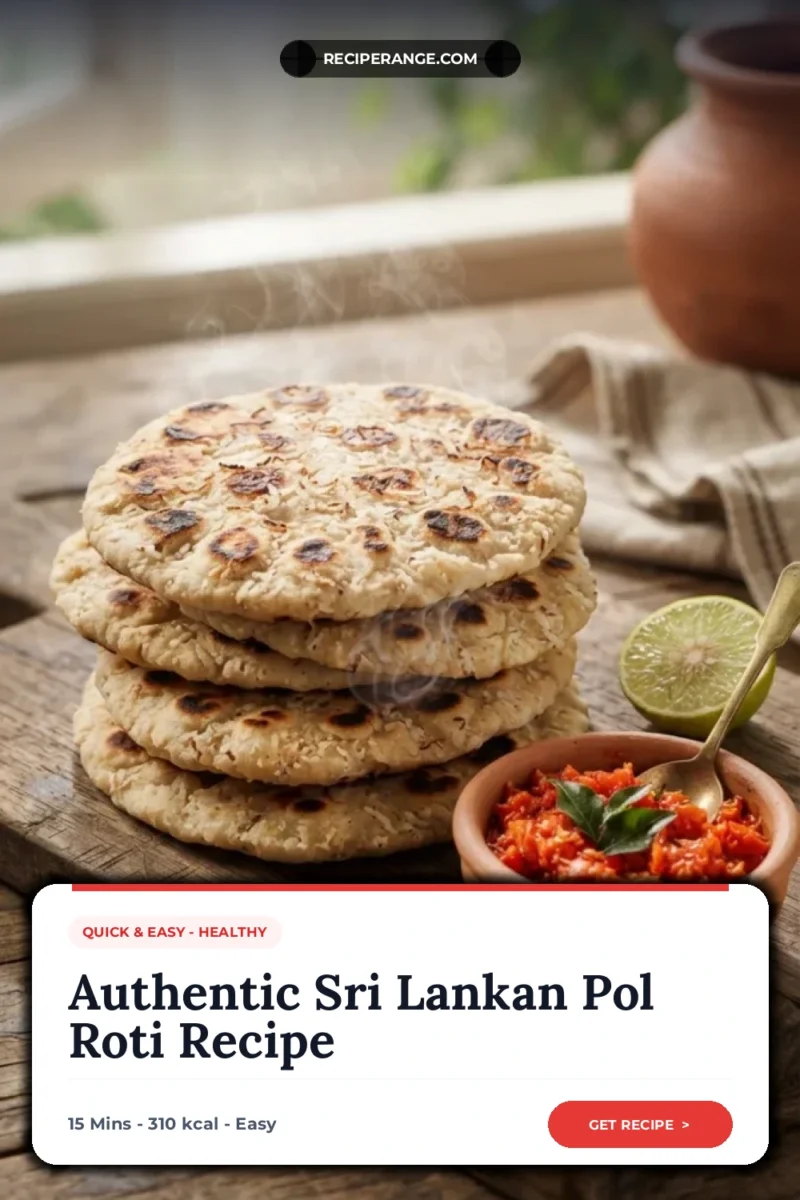
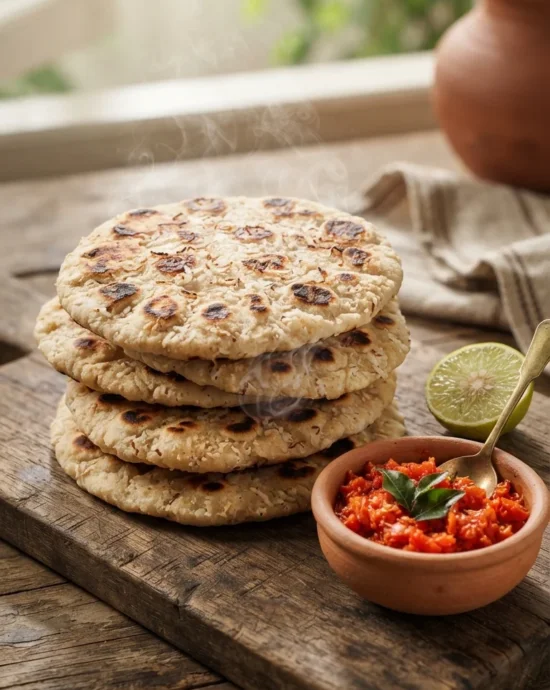
The air in a Sri Lankan kitchen at dawn is thick with the intoxicating scent of toasted coconut and the rhythmic ‘thwack’ of dough being shaped by hand. Pol Roti, or coconut flatbread, is more than just a meal; it is a sensory journey into the heart of the Indian Ocean’s emerald isle. Imagine a warm, rustic disc of bread, its exterior mottled with golden-brown charred spots that offer a satisfying crunch, giving way to a soft, moist interior punctuated by the sweet, milky richness of freshly grated coconut. As it hits the hot cast-iron griddle, the oils from the coconut release a nutty fragrance that mingles with the sharp, herbaceous notes of chopped curry leaves and the subtle heat of green chilies. This is the ultimate comfort food—a bread that demands to be torn apart by hand and dipped into a fiery lunu miris or a creamy dhal curry, providing a perfect harmony of textures and flavors that linger on the palate long after the last bite.
To achieve the perfect Pol Roti, one must understand the delicate balance between the hydration of the flour and the moisture of the coconut. Too much water and the bread becomes gummy; too little and it turns into a dry cracker. As an executive chef, I have spent years perfecting this ratio to ensure a crumb that is tender yet structured. The addition of finely diced red onions and green chilies isn’t just for flavor; these aromatics soften during the cooking process, releasing their essential oils directly into the dough, creating a complex flavor profile that is uniquely Sri Lankan. Whether you are enjoying this for a traditional breakfast or as a side to a rich evening curry, the Pol Roti is a testament to the beauty of simple, high-quality ingredients treated with respect and technique.
The Story & Culinary Inspiration Behind This Dish
Pol Roti is deeply woven into the culinary tapestry of Sri Lanka, reflecting the island’s abundance of coconut palms, often referred to as the ‘Tree of Life.’ Historically, this flatbread was a peasant staple, designed to be hearty enough to fuel a day of labor in the paddy fields while utilizing simple, local ingredients. Unlike the refined naans of the north or the layered parathas of the south, Pol Roti is unapologetically rustic. The science behind its unique texture lies in the interaction between the wheat flour and the freshly grated coconut. The coconut provides both fat and moisture, which interferes with gluten development, resulting in a bread that is tender rather than chewy. In Sri Lankan culture, serving Pol Roti is an act of warmth; it is the bread of the home, often prepared for unexpected guests or as a celebratory breakfast during the Sinhalese and Tamil New Year. It embodies the ‘Hela’ culinary philosophy—balance, freshness, and a deep respect for the land and its resources.
Why You'll Fall in Love with This Recipe
- Textural Symphony: The contrast between the charred, crispy exterior and the soft, coconut-flecked interior is a masterclass in bread-making.
- Aromatic Depth: The inclusion of curry leaves and green chilies provides a complex flavor profile that elevates it far beyond a simple flatbread.
- Ultimate Versatility: While traditionally savory, it can easily pivot to a sweet treat when paired with kithul treacle or jaggery for a dessert-like experience.
Health Benefits & Dietary Highlights
- Healthy MCT Fats: Coconut is rich in Medium-Chain Triglycerides (MCTs), which are metabolized quickly by the liver for a sustained energy boost.
- Digestive Fiber: The use of whole grated coconut adds significant dietary fiber, promoting gut health and helping to regulate blood sugar levels.
- Essential Minerals: Contains manganese, copper, and iron, supporting bone health and the production of red blood cells.
Key Ingredients & Smart Substitutions
- Fresh Grated Coconut: The soul of the dish; provides moisture, fat, and a sweet nuttiness. Use freshly grated for the best texture, or rehydrated unsweetened desiccated coconut in a pinch.
- All-Purpose Flour: Provides the necessary structure. Can be substituted with a 50/50 mix of whole wheat and white flour for added nuttiness and fiber.
- Aromatic Base: Finely minced red onion, green chilies, and curry leaves create the signature savory profile that defines an authentic Sri Lankan roti.
Detailed Step-by-Step Cooking Walkthrough
- 1. Combine & Rub: Mix flour, coconut, and salt, rubbing the coconut into the flour with your fingertips to release the natural oils and milk.
- 2. Hydrate & Knead: Gradually add water and aromatics, kneading into a soft, non-sticky dough that feels like an earlobe in texture.
- 3. Portion & Flatten: Divide the dough into equal balls and flatten them into 1/4 inch thick discs using your palms or a rolling pin.
- 4. Dry-Toasting: Cook on a preheated cast-iron griddle over medium heat until golden-brown charred spots appear on both sides.
Critical Do's and Don'ts for Foolproof Success
- ✅ DO: Use Fresh Coconut: If possible, grate a fresh coconut. The moisture content is superior to dried versions and yields a much softer roti.
- ❌ DON'T: Over-knead the Dough: Knead only until combined. Over-working develops too much gluten, making the roti tough and rubbery rather than tender.
- ✅ DO: Rest the Dough: Allow the dough to rest for at least 15 minutes. This hydrates the flour fully and makes the dough much easier to shape.
- ❌ DON'T: Use High Heat: Avoid scorching the outside while the inside remains raw. Maintain a steady medium heat for even cooking and a perfect char.
How to Store, Freeze & Reheat Without Losing Quality
- Refrigeration: Wrap rotis in a clean kitchen towel and store in an airtight container for up to 3 days.
- Freezing: Layer with parchment paper and store in a heavy-duty freezer bag for up to 1 month. Thaw at room temperature.
- Reheating: Reheat on a dry skillet over medium heat for 1 minute per side to restore crispness. Avoid microwaving as it makes them soggy.
Delicious Serving Suggestions & Wine/Side Pairings
- Traditional Sambols: Serve with Lunu Miris (chili-onion paste) or Pol Sambol (coconut sambol) for a classic Sri Lankan experience.
- Curry Accompaniments: Pairs perfectly with Parippu (Dhal Curry) or a spicy Chicken or Fish Ambul Thiyal.
- Beverage: Enjoy with a hot cup of Ceylon Ginger Tea or a fresh King Coconut water.
Chef's Pro Secrets for Restaurant-Quality Flavor
- The Squeeze Technique: When mixing the coconut and flour, squeeze them together firmly before adding water. This extracts coconut milk to naturally hydrate the flour.
- Uniform Thickness: Ensure the edges are as thin as the center to prevent 'doughy' rims that don't cook through properly.
- Flavor Infusion: For a deeper flavor, lightly sauté the onions and chilies in a teaspoon of coconut oil before adding them to the dough.
Frequently Asked Questions (FAQ)
Can I use desiccated coconut?
Yes, but soak it in 2-3 tablespoons of warm water or coconut milk for 10 minutes first to rehydrate it before adding to the flour.
Is Pol Roti gluten-free?
Traditionally no, but you can use a high-quality 1:1 gluten-free flour blend, though the texture will be slightly more crumbly.
Why is my roti hard?
This usually happens if the dough was too dry or if it was cooked for too long on low heat, causing the moisture to evaporate completely.