

- Prepare the Flour
In a large mixing bowl, combine the roasted rice flour and salt. Whisk to distribute evenly.
- Add Boiling Water
Gradually pour in the boiling water while stirring continuously with a wooden spoon or spatula until the mixture forms a crumbly, shaggy mass.
- Knead the Dough
Allow it to cool just enough to handle safely. Knead the dough with your hands for 3-4 minutes until it becomes smooth, soft, and pliable without sticking to your fingers.
- Press the Nests
Lightly oil your string hopper steamer plates (thattu). Divide the dough into portions that fit your string hopper press. Press the dough in circular, overlapping spirals onto each plate to form neat nests.
- Steam to Perfection
Bring water to a vigorous boil in a steamer pot. Stack the string hopper plates inside, cover with the lid, and steam on medium-high heat for 10 to 12 minutes until cooked and translucent.
- Serve Warm
Remove from steamer, let cool for 1 minute, and gently invert the plates to release the string hoppers onto a serving platter. Serve immediately with curries and sambol.
- Calories:240 kcal
- Protein:4 g
- Total Fat:3.5 g
- Saturated Fat:3 g
- Cholesterol:mg
- Sodium:290 mg
- Potassium:45 mg
- Total Carbohydrates:50 g
- Dietary Fiber:2 g
- Sugars:g
- Calcium:15 mg
- Iron:1.2 mg
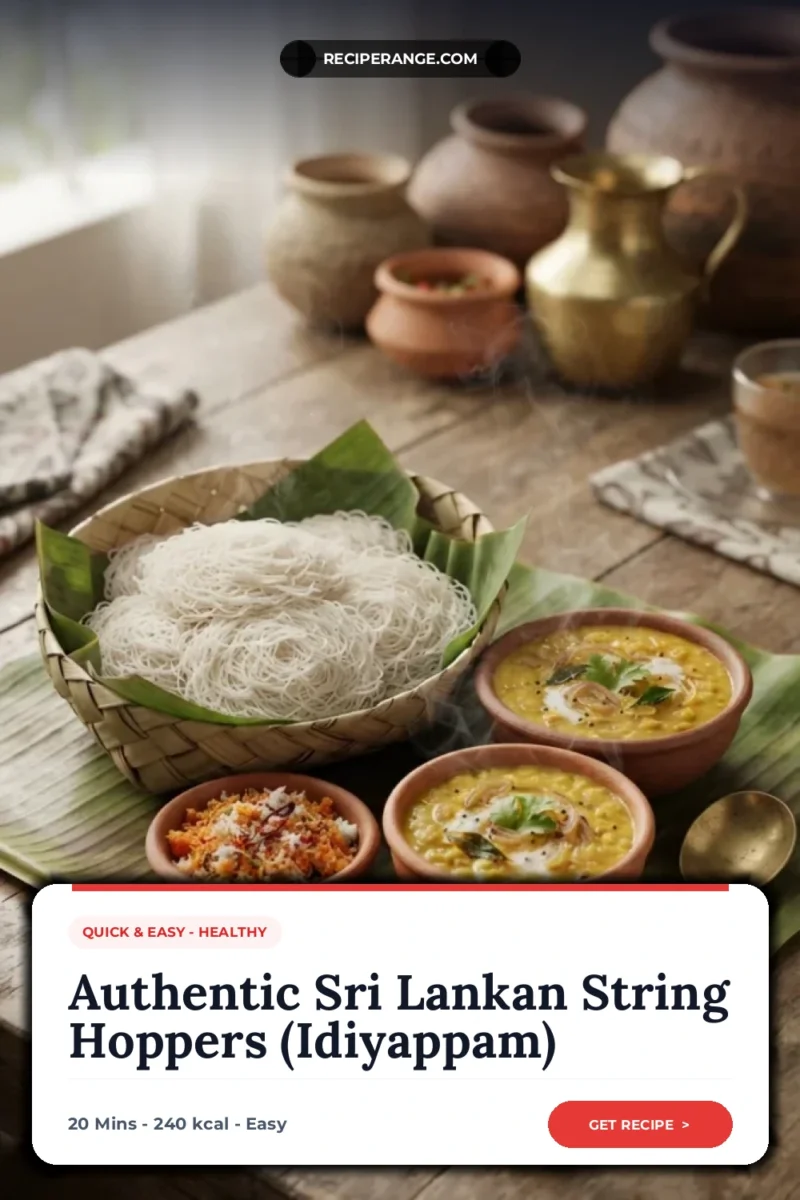
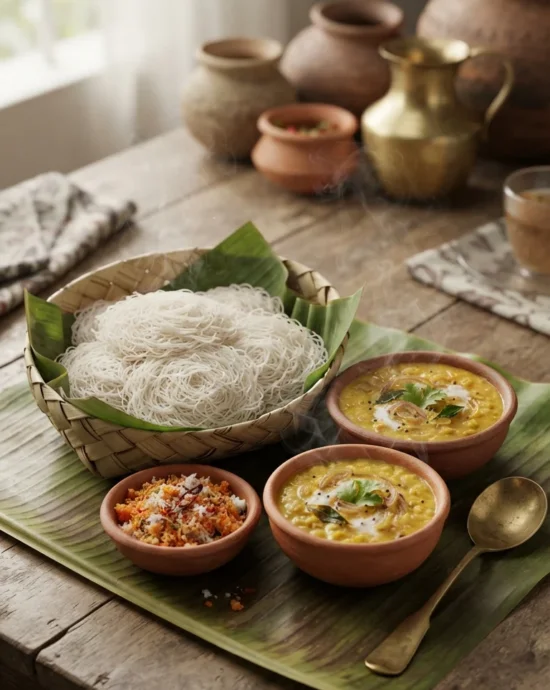
Stepping into a traditional Sri Lankan kitchen early in the morning often begins with the hypnotic, rhythmic motion of dough being pressed through a wooden string hopper press. Soft, snowy mounds of delicate rice noodles—known locally as Idiyappam—coil together into beautiful edible nests that practically melt on the tongue. The gentle, earthy fragrance of roasted red rice flour fills the air, promising a comforting meal ahead.
Served piping hot straight from the steamer, these fragile noodle coils are the crown jewel of Sri Lankan breakfast and dinner tables. When paired with a fiery coconut sambol and a silky, spiced dhal or velvety coconut chicken curry, string hoppers offer an intricate play of textures and warming aromatics that elevate simple ingredients into an unforgettable culinary masterpiece.
The Story & Culinary Inspiration Behind This Dish
Rooted deeply in South Indian and Sri Lankan heritage, string hoppers have sustained island communities for centuries. Traditionally made from freshly ground red or white rice flour, boiling water, and a pinch of salt, the dough is extruded through a brass or wooden press onto small woven wicker mats called ‘thattu’. Steaming transforms the dense dough into whisper-light threads. While modern home cooks utilize stainless steel presses and non-stick tier steamers, the soulful technique of achieving the ideal dough hydration remains a cherished culinary art passed down through generations.
Why You'll Fall in Love with This Recipe
- Delicate Texture: Incredibly soft, cloud-like noodle nests that absorb curries and gravies effortlessly.
- Naturally Wholesome: Made from simple, clean ingredients without gluten, oils, or artificial preservatives.
- Cultural Authenticity: Brings the vibrant, comforting flavors of a traditional Sri Lankan household straight to your kitchen.
Health Benefits & Dietary Highlights
- Easily Digestible: Steamed rice flour provides gentle, soothing carbohydrates that are exceptionally easy on the digestive system.
- Gluten-Free Comfort: Naturally free of gluten and dairy, making it suitable for sensitive dietary requirements.
- Low-Fat Energy: Contains virtually zero fat, offering clean, sustained energy without weighing you down.
Key Ingredients & Smart Substitutions
- Rice Flour: Use roasted or idiyappam flour for the best structural integrity and nutty flavor profile.
- Boiling Water: Crucial for partially cooking the starch (gelatinization), which prevents the noodles from breaking apart.
- Coconut Oil: A light coating ensures the delicate noodle nests release effortlessly from the steamer plates.
Detailed Step-by-Step Cooking Walkthrough
- 1. Scald the Flour: Mix roasted rice flour with boiling water and salt using a wooden spoon until a crumbly dough forms.
- 2. Knead the Dough: Knead into a smooth, pliable dough ball that holds together without cracking.
- 3. Press into Nests: Load into a string hopper press and swirl in circular motions onto oiled steamer molds.
- 4. Steam to Perfection: Steam over boiling water on high heat for 10-12 minutes until cooked through.
Critical Do's and Don'ts for Foolproof Success
- ✅ DO: Use Boiling Water: Water must be at a rolling boil to properly gelatinize the rice flour starches for pliable dough.
- ❌ DON'T: Let Dough Cool Completely: Shape the string hoppers while the dough is comfortably warm so it doesn't dry out and crack in the press.
- ✅ DO: Lightly Oil the Molds: Brush steamer plates with coconut oil or sesame oil to prevent the delicate rice strands from sticking.
- ❌ DON'T: Overcrowd the Steamer: Ensure adequate steam circulation between tiers so all string hoppers cook evenly.
How to Store, Freeze & Reheat Without Losing Quality
- Refrigeration: Store leftover string hoppers in an airtight container in the refrigerator for up to 2 days.
- Freezing: Can be frozen after steaming. Layer between parchment paper in a freezer bag for up to 1 month.
- Reheating: Steam for 3-5 minutes over boiling water until piping hot and soft. Avoid microwaving without a damp towel covering them.
Delicious Serving Suggestions & Wine/Side Pairings
- Curries: Pair with Sri Lankan coconut chicken curry, spicy fish curry, or creamy yellow dhal.
- Condiments: Serve alongside freshly grated Pol Sambol (coconut sambol) and Lunu Miris (onion-chili relish).
- Beverage: Enjoy with a warm cup of spiced Ceylon tea or sweet king coconut water.
Chef's Pro Secrets for Restaurant-Quality Flavor
- Flour Selection: Look for 'Idiyappam Flour' or 'Red/White Rice String Hopper Flour' at Asian specialty markets.
- Smooth Pressing: If the dough is too stiff to press, knead in a single tablespoon of warm water at a time.
- Keep Covered: Keep the remaining dough ball covered with a damp kitchen towel while you work in batches.
Frequently Asked Questions (FAQ)
Can I use standard all-purpose flour?
No, string hoppers rely entirely on the unique starch properties of rice flour. All-purpose flour will result in a gummy texture.
What if I don't have a string hopper press?
You can use a heavy-duty stainless steel potato ricer fitted with the finest hole disc available.
Why are my string hoppers breaking apart?
This usually happens if the water wasn't boiling hot enough when mixing the dough, or if the dough is too dry.