

- Sear the Meats
In a massive stockpot, brown the beef and pork in batches until deep brown. Remove and set aside.
- Build the Base
Add the onions to the pot, sautéing until translucent. Deglaze with a splash of broth to lift the browned bits.
- Simmer
Return meat to the pot, add chicken and beef broth. Simmer on low heat for 3 hours until meats pull apart easily.
- Add Vegetables
Remove bones from chicken, shred meat, and return to pot. Add carrots and potatoes. Cook for 45 minutes.
- Finish
Stir in peas and corn. Simmer for 15 minutes, adjust salt and pepper, and serve hot.
- Calories:420 kcal
- Protein:38 g
- Total Fat:16 g
- Saturated Fat:5 g
- Cholesterol:95 mg
- Sodium:720 mg
- Potassium:680 mg
- Total Carbohydrates:32 g
- Dietary Fiber:4 g
- Sugars:5 g
- Calcium:60 mg
- Iron:3.5 mg
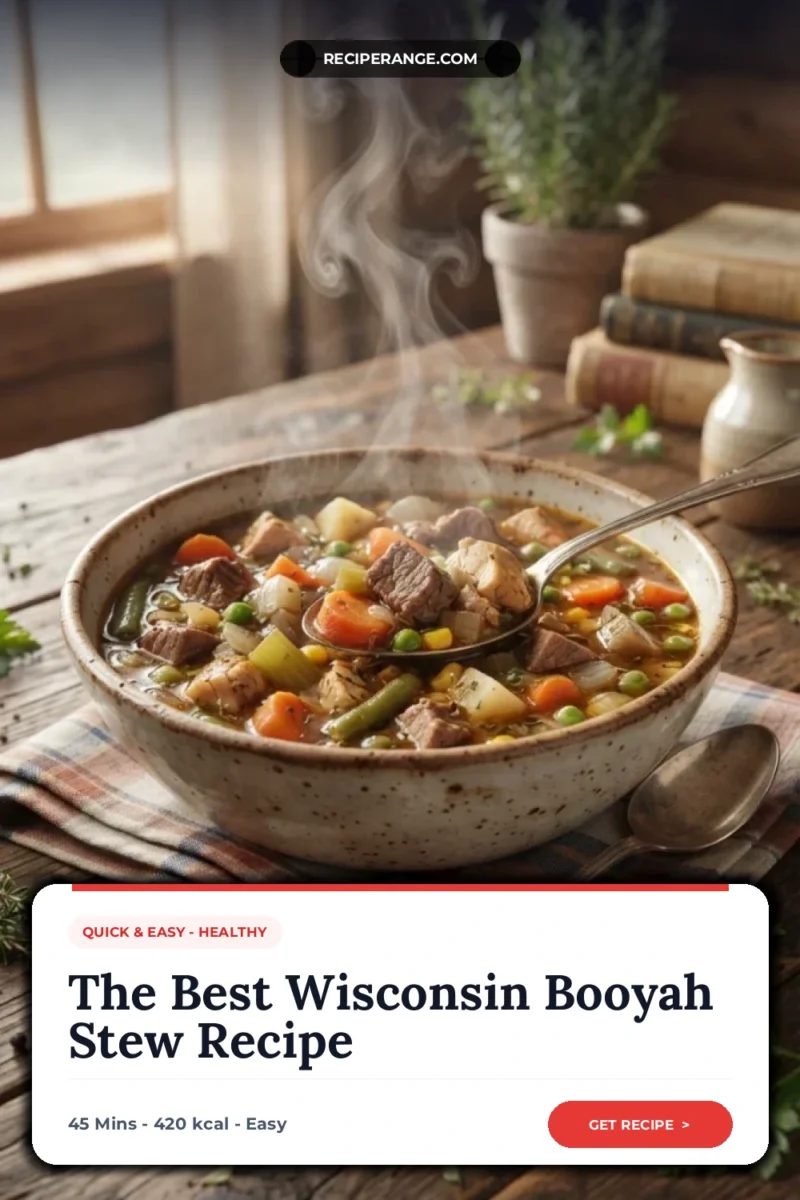
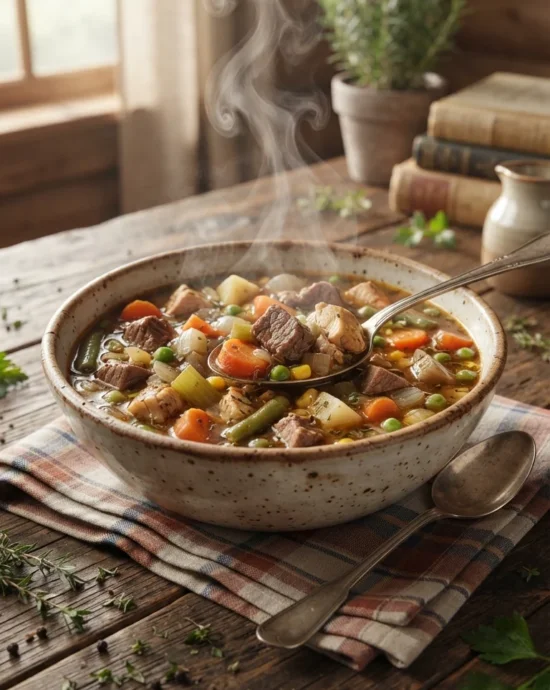
There is a specific, intoxicating aroma that drifts through the crisp autumn air of the Midwest—a scent of slow-simmered beef, savory aromatics, and the quiet promise of community. Wisconsin Booyah is more than just a stew; it is a culinary institution. As the steam rises from the heavy kettle, it carries with it the essence of a dish that has been perfected over generations, intended for large gatherings and shared stories.
Imagine a broth that is velvety and deep, coating each forkful of tender, melt-in-your-mouth meat and perfectly softened root vegetables. The first spoonful hits the palate with a complex profile of umami, earthiness, and a subtle sweetness from the corn and peas, providing a comforting warmth that resonates from the inside out. It is the definitive ‘giant’ stew that brings people together, turning any backyard gathering into a grand feast.
The Story & Culinary Inspiration Behind This Dish
Booyah is a quintessential Belgian-American culinary tradition, deeply rooted in the Green Bay and Door County regions of Wisconsin. Its name is believed to be a phonetic evolution of the French term ‘bouillon.’ Historically, Booyah was prepared in massive, custom-built steel kettles over open fires, often as a fundraiser for churches or community events. The beauty of the dish lies in its ‘kitchen sink’ approach, where a variety of meats—typically beef, pork, and chicken—are slow-cooked for hours to create a complex, multi-layered broth that is impossible to replicate in a small pot.
The flavor science behind Booyah relies on the slow breakdown of connective tissues and the gradual melding of aromatics. By using a combination of meats, you achieve a depth of gelatinous body and savory intensity that defines ‘heritage cooking.’ It is a testament to the resourcefulness of early settlers who understood that patience, low heat, and high-quality ingredients were the secrets to feeding a crowd.
Why You'll Fall in Love with This Recipe
- Unmatched Depth: The combination of three meats creates a broth with a complex, savory body that store-bought stocks can't touch.
- Crowd-Pleaser: Specifically designed to feed a large group, making it the perfect centerpiece for festive autumn gatherings.
- Nutrient Density: Packed with high-quality protein and a rainbow of root vegetables, providing a balanced, nourishing meal.
Health Benefits & Dietary Highlights
- Bioavailable Protein: The blend of meats provides a complete amino acid profile for muscle repair and satiety.
- Micronutrient Support: The inclusion of carrots, celery, and onions ensures a healthy dose of vitamins A, C, and K.
- Gut Health: The long-simmered broth is rich in collagen and amino acids like glycine, which support digestive health.
Key Ingredients & Smart Substitutions
- The Meat Trio: Beef chuck, pork shoulder, and bone-in chicken create the foundational depth of the broth.
- Root Vegetables: Potatoes, carrots, and onions are the backbone, providing texture and natural sweetness.
- The Finishers: Frozen peas and corn are added at the end to provide a pop of color and freshness.
Detailed Step-by-Step Cooking Walkthrough
- 1. Sear & Build: Brown the beef and pork in a large stockpot to develop a deep, caramelized fond.
- 2. Long Simmer: Add water/stock and aromatics, simmering for 3-4 hours until the meats are fork-tender.
- 3. Veggie Integration: Stir in the chopped vegetables, ensuring they cook through without losing their shape.
- 4. Final Seasoning: Adjust salt and pepper to taste; the stew should be hearty, thick, and perfectly balanced.
Critical Do's and Don'ts for Foolproof Success
- ✅ DO: Use Bone-In Cuts: The marrow from the bones is essential for achieving the authentic, silky mouthfeel of true Booyah.
- ❌ DON'T: Rush the Process: Booyah is a slow-food dish. Lowering the heat and letting it bubble gently is non-negotiable for tender meat.
- ✅ DO: Skim the Fat: Periodically skim the surface to ensure the broth stays clean and flavorful rather than greasy.
- ❌ DON'T: Overcook the Peas: Add frozen vegetables in the final 15 minutes to keep them bright and firm.
How to Store, Freeze & Reheat Without Losing Quality
- Refrigeration: Store in large, sealed containers for up to 5 days; the flavor often improves on day two.
- Freezing: Booyah freezes exceptionally well. Portion into freezer-safe bags and freeze for up to 6 months.
- Reheating: Warm gently on the stovetop over medium-low heat. Add a splash of water if the stew has thickened too much.
Delicious Serving Suggestions & Wine/Side Pairings
- Traditional Side: Serve with thick slices of buttered sourdough or classic soda crackers.
- Light Accompaniment: A bright cabbage slaw or a sharp vinegar-based garden salad balances the richness of the stew.
- Beverage: A crisp, Wisconsin-style lager or a robust amber ale complements the savory notes perfectly.
Chef's Pro Secrets for Restaurant-Quality Flavor
- The Kettle Rule: If you don't have a giant cauldron, a heavy 12-quart Dutch oven is the best professional alternative.
- Mirepoix Precision: Cut your vegetables into uniform, chunky pieces so they hold their integrity during the long cook time.
- Seasoning Layers: Season the broth in stages. Don't add all the salt at the beginning, as the liquid reduces and intensifies.
Frequently Asked Questions (FAQ)
Can I use different meats?
Absolutely. While beef, pork, and chicken are traditional, you can adapt based on what is available.
Is Booyah supposed to be thin or thick?
It should be thick enough to hold a spoon upright, but still have plenty of rich, savory broth.
What is the secret to the best Booyah?
Patience. The longer it sits and melds, the better the final flavor profile becomes.