
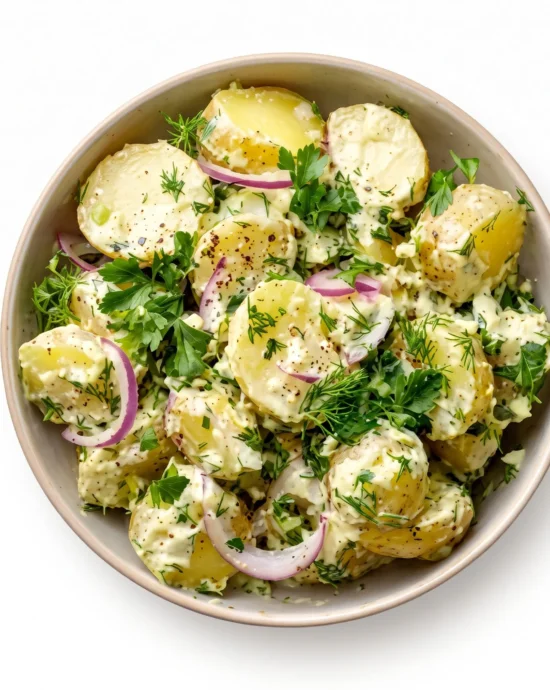

- Boil Potatoes Tender
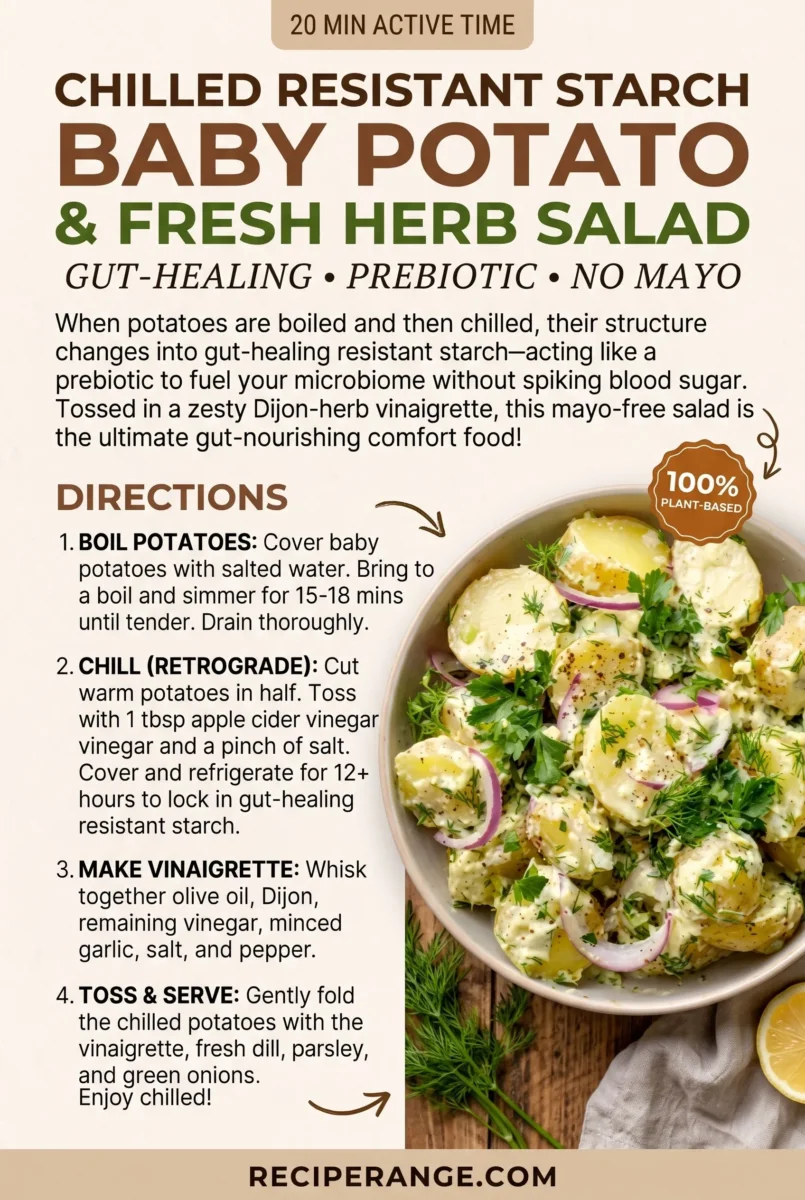
Place whole baby potatoes into a large pot and cover with cold water by 1 inch. Add 1 teaspoon of salt. Bring to a rolling boil over high heat, then reduce to medium and simmer for 15 to 18 minutes until tender when pierced with a fork. Drain thoroughly.
- Season Warm & Retrograde (The 12-Hour Chill)
Slice warm potatoes in half. Place into a shallow dish and drizzle with 1 tablespoon of apple cider vinegar and a pinch of salt. Cover and refrigerate for at least 12 hours (ideally overnight). This crystallization chill is the essential step that converts starches into gut-healing type 3 resistant starch.
- Whisk Herb Dijon Vinaigrette
In a small mixing bowl or glass mason jar, whisk together 3 tablespoons of extra virgin olive oil, 1.5 tablespoons of Dijon mustard, 1 tablespoon of apple cider vinegar, grated garlic, kosher salt, and black pepper until creamy and emulsified.
- Toss & Garnish
Transfer chilled potatoes to a large salad bowl. Pour the Dijon vinaigrette over the potatoes. Add the chopped fresh dill, parsley, and sliced scallions. Gently fold with a rubber spatula until every potato crevice is glistening with herbed dressing. Taste and adjust seasoning with a pinch of flaky sea salt.
- Serve Chilled
Serve immediately straight from the refrigerator or at cool room temperature. Pairs magnificently with grilled wild salmon, roast chicken, or as a high-prebiotic lunch bowl!
- Calories:195 kcal
- Protein:4 g
- Total Fat:7 g
- Carbohydrates:31 g
- Dietary Fiber:6 g
- Net Carbs:25 g
- Sugars:2 g
- Sodium:380 mg
For decades, conventional diet culture demonized the humble white potato as an empty, blood-sugar-spiking carbohydrate that must be avoided at all costs. But cutting-edge gastrointestinal microbiome research has turned this myth on its head through a fascinating biochemical phenomenon known as starch retrogradation. When potatoes are boiled and subsequently chilled, their molecular crystalline structure re-aligns, transforming rapid-digesting amylose into type 3 resistant starch (RS3) – a metabolic super-nutrient that completely bypasses digestion in the small intestine.
This chilled resistant starch baby potato and fresh herb salad is the gold standard of gut-healing, prebiotic comfort food. Tender bite-sized baby Yukon gold potatoes are gently steamed, chilled to lock in resistant starch, and tossed in a vibrant, zesty French Dijon and extra virgin olive oil vinaigrette with mounds of fresh aromatic dill, flat-leaf parsley, and green scallions. With zero heavy mayonnaise, this 100% plant-based salad delivers 6 grams of gut-nourishing prebiotic fiber per serving while keeping post-meal blood sugar levels exceptionally calm.
The Microbiome Science: Why Retrograded Starch Heals Your Gut
Unlike standard cooked starches that dissolve into glucose in your stomach, resistant starch behaves like pure soluble prebiotic fiber:
- The Fuel for Butyrate Production: When cooled potatoes arrive in your large intestine intact, beneficial commensal bacteria (particularly Faecalibacterium prausnitzii and Bifidobacteria) ferment the resistant starch into short-chain fatty acids (SCFAs), primarily butyrate. Butyrate is the primary fuel source for the cells lining your colon (colonocytes), reducing gut wall permeability (“leaky gut”) and lowering systemic bowel inflammation.
- Blunted Glycemic Index (The Cool-Down Effect): Chilling cooked potatoes for at least 12 to 24 hours cuts their glycemic index by nearly 40%. Glucose is absorbed into the bloodstream so slowly that insulin spikes are virtually eliminated.
- The Second-Meal Effect: Clinical studies confirm that consuming resistant starch at lunch improves insulin sensitivity and glucose tolerance for your evening dinner and following morning meal.
- No Industrial Seed Oils: Traditional deli potato salads are saturated with soybean oil mayonnaise and refined sugars. This rustic version utilizes cold-pressed extra virgin olive oil rich in oleocanthal – a natural anti-inflammatory compound that rivals low-dose ibuprofen.
Chef’s Technique: How to Maximize Resistant Starch
The biochemical transformation of potato starch requires precision temperature management:
- Boil Whole with Skins On: Keeping the skins intact retains dietary potassium, vitamin C, and fiber while preventing the potatoes from absorbing excess water. Cook just until fork-tender (15 to 18 minutes).
- The Mandatory 12-Hour Chill: Starch retrogradation is not instantaneous; it requires cold crystallization. Transfer cooked potatoes into your refrigerator at 38°F (4°C) for a minimum of 12 hours (ideally 24 hours). This simple step triples the resistant starch concentration.
- Dress Twice for Maximum Flavor: Toss warm potatoes with 1 tablespoon of apple cider vinegar right after steaming so the acid absorbs into the warm flesh. Then toss with the remaining Dijon herb vinaigrette after the potatoes are thoroughly chilled.
Key Ingredients & Flavor Layering
- Baby Gold or Red Potatoes: Thin-skinned baby potatoes provide a natural creamy, buttery interior without peeling.
- Extra Virgin Olive Oil: The heart of Mediterranean cooking, delivering healthy monounsaturated fats that aid nutrient assimilation.
- Dijon Mustard & Apple Cider Vinegar: Gives the dressing its tangy, punchy bite that cuts through earthy potatoes while providing raw acetic acid for digestive enzyme stimulation.
- Fresh Garden Herbs (Dill & Parsley): Dill and Italian parsley add an herbaceous freshness and natural chlorophyll that transforms this into a crisp bistro-style salad.
- Thinly Sliced Scallions: Mild green onions provide allium aromatics and prebiotic inulin fibers.
Frequently Asked Questions
Can I reheat this potato salad without losing the resistant starch?
Yes, but keep the heat gentle! Studies show that resistant starch remains largely intact if reheated below 130°F (55°C). However, this salad is specifically designed to be enjoyed chilled or at room temperature for peak crispness and microbiome benefits.
How long does this salad keep in the fridge?
It keeps exceptionally well in an airtight glass container for up to 5 days. In fact, resistant starch levels peak between day 2 and day 4, making this the undisputed champion of gut-health meal prep!