

- Sauté the Aromatics
Heat olive oil or ghee in a saucepan over medium heat. Add onion or fennel and sauté for 3–4 minutes until soft. Add garlic (if using) in the last 30 seconds.
- Add Vegetables
Stir in chopped carrots and squash/pumpkin. Sauté for 3–5 minutes to enhance sweetness.
- Simmer Gently
Add broth or water, basil, oregano, and salt. Cover and simmer for 15–18 minutes until vegetables are tender.
- Blend Until Smooth
Cool slightly, then blend until creamy using an immersion or regular blender. Be cautious with hot liquids.
- Adjust Texture and Flavor
Stir in coconut cream or milk for silkiness. Add nutritional yeast for a cheesy depth. Taste and adjust seasoning.
- Calories :80 kcal
- Total Fat:4-6 g
- Carbohydrates:6-8 g
- Sugars:3–5 g
- Protein:1–2 g
- Iron:Low
If you’re looking for a delicious pasta sauce that won’t trigger acid reflux or upset a sensitive digestive system, this tomato-free pasta sauce (frequently called “Nomato” sauce) is exactly what you need. Unlike traditional marinara, this gut-friendly alternative completely skips tomatoes and other nightshades while still delivering the warmth, rich flavor, and satisfying texture you crave on pasta night.
Whether you’re managing GERD, gastritis, chronic acid reflux, recovering from stomach issues, or strictly avoiding tomatoes due to nightshade allergies, this recipe offers a safe, comforting, and tasty solution. Made with naturally soothing root vegetables like carrots, pumpkin, and aromatic herbs, this sauce is naturally creamy, completely nightshade-free, and pairs beautifully with your favorite Italian dishes.
🚫 The Problem with Traditional Tomato Sauce
For millions of people worldwide, a classic spaghetti dinner comes with a heavy price: painful heartburn, chest tightness, and hours of digestive discomfort. Traditional pasta sauces rely entirely on tomatoes, which are inherently problematic for sensitive stomachs for two major reasons:
- High Acidity: Tomatoes have a remarkably low pH, meaning they are highly acidic. This acid relaxes the lower esophageal sphincter (LES), allowing stomach acid to creep back up into the esophagus, triggering severe acid reflux and GERD symptoms.
- Nightshade Sensitivities: Tomatoes belong to the solanaceae (nightshade) family. Nightshades contain alkaloids, compounds that can aggravate the gut lining, trigger joint inflammation, and worsen symptoms for individuals dealing with autoimmune conditions or leaky gut.
By eliminating tomatoes entirely and replacing them with alkaline, nutrient-dense vegetables, this recipe allows you to enjoy classic Italian comfort food without a single drop of acid or digestive regret.
🥕 The Secret Ingredients: How to Mimic Tomato Flavor
You might be wondering: How can a sauce taste like authentic Italian marinara without a single tomato? The secret lies in a clever combination of naturally sweet root vegetables, savory updates, and a touch of acidity management.
1. The Base: Carrots, Beets, and Pumpkin
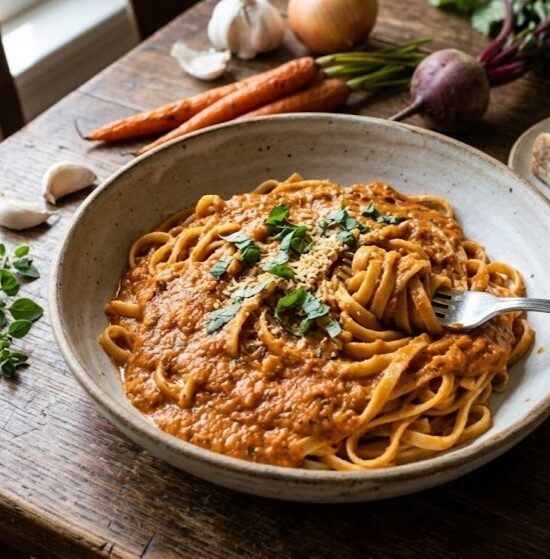
Instead of simmering crushed tomatoes, this sauce utilizes a base of steamed or roasted carrots, beets, and pumpkin (or butternut squash).
- Carrots provide the essential bulk, natural sweetness, and a smooth, velvety texture when pureed.
- Pumpkin adds a rich, comforting depth and creaminess that mimics the cooked-down texture of tomato paste.
- Beets are the ultimate secret weapon. Just a small piece of a red beet transforms the orange hue of the carrots and pumpkin into a rich, deep, authentic “tomato red” color.
2. The Flavor Profile: Garlic, Onions, and Italian Herbs
To ensure this doesn’t just taste like baby food or vegetable soup, we load the base with classic Italian aromatics. Sautéing plenty of garlic and onions in high-quality olive oil creates the foundational savory notes of a true Italian sauce. Sautéing herbs like fresh basil, oregano, rosemary, and thyme directly into the oil infuses the vegetable puree with that distinct, unmistakable “pizza parlor” aroma.
🍝 Creative Ways to Use Your Tomato-Free Marinara Substitute
This low-acid sauce is incredibly versatile and stands in perfectly for standard tomato-based sauces across a variety of recipes. Here are a few delicious ways to integrate it into your weekly meal prep:
- Classic Pasta Night: Toss it with gluten-free, chickpea, or whole-grain pasta for a quick, comforting weeknight meal.
- Italian Baked Dishes: Use it as the foundational red layer in a gut-friendly lasagna, stuffed shells, or baked ziti.
- Nightshade-Free Pizza: Spread it generously on a homemade gluten-free or cauliflower pizza crust as a tomato-free pizza sauce alternative.
- Low-Carb Grain Bowls: Pour it over fresh zucchini noodles (zoodles), roasted spaghetti squash, or warm quinoa bowls.
- Dipping Sauce: Warm it up and serve it alongside gluten-free garlic bread or baked mozzarella sticks.
🩺 The Health Benefits: Why This Sauce Is So Gut-Friendly
Standard pasta sauces can be a nightmare for structural gut health. This recipe was engineered specifically to be as gentle and healing to your digestive tract as possible:
- 100% Nightshade-Free: Completely free from tomatoes, bell peppers, chili flakes, white potatoes, and eggplant, making it fully compliant with the Autoimmune Protocol (AIP) and nightshade-free diets.
- Low-Acid Composition: By replacing tomatoes with naturally sweet, more alkaline root vegetables, it completely bypasses the painful esophageal irritation associated with heartburn and GERD.
- Anti-Inflammatory Properties: Packed with beta-carotene and antioxidants from carrots and pumpkin, alongside healing herbs that actively work to calm inflammation in the stomach lining.
- Bloat-Free Comfort: Provides a rich, savory flavor profile without heavy dairy creams, artificial thickeners, or triggering ingredients that cause painful bloating or gas.
📦 Storage, Freezing, and Meal Prep Tips
Because this tomato-free sauce is made entirely from whole vegetables, it preps and stores beautifully, making it an excellent candidate for batch cooking.
- In the Refrigerator: Store your leftover sauce in an airtight glass jar for up to 4 to 5 days.
- In the Freezer: This sauce freezes exceptionally well. Let the sauce cool completely to room temperature, then pour it into freezer-safe containers or silicone molds. It will retain its fresh flavor for up to 3 months.
- Reheating: When you are ready to eat, simply thaw the sauce in the fridge overnight and reheat it gently on the stovetop over low-medium heat. If the sauce has thickened up too much during storage, whisk in a tablespoon of bone broth or water to restore its silky texture.
❓ Frequently Asked Questions (FAQs)
Can I make this sauce low-FODMAP?
Yes! If you are sensitive to garlic and onions due to IBS, you can easily adapt this recipe. Simply omit the fresh garlic and onions, and instead use garlic-infused olive oil to sauté your herbs. This gives you all the traditional Italian flavor without the fermentable carbohydrates that trigger bloating.
What gives the sauce its red color if there are no tomatoes?
The bright red color comes entirely from a small piece of fresh red beet blended into the carrot and pumpkin base. Beets have incredibly strong natural pigments that perfectly mimic the appearance of real marinara sauce, ensuring your eyes (and your kids) won’t even notice the difference.
Is this sauce safe for severe acid reflux?
Absolutely. Tomatoes are one of the top medical triggers for acid reflux flare-ups. Because this recipe relies on alkaline root vegetables and soothing herbs, it provides a completely safe, low-acid environment for your stomach, preventing the biological triggers of heartburn.