


- The Coarse Grind
Using a burr grinder, process your coffee beans until they reach the consistency of coarse sea salt or raw sugar. Avoid a fine powder, as this will result in a murky, bitter brew.
- Combining the Elements
Place the coffee grounds into a large glass jar or French press. Slowly pour the filtered water over the grounds, ensuring all are saturated. If using a vanilla bean or cinnamon stick, submerge it now.
- The Long Steep
Cover the container with a lid or plastic wrap. Let it sit undisturbed on your kitchen counter at room temperature for 12 to 16 hours. Avoid direct sunlight.
- The Filtration Process
After steeping, pour the mixture through a fine-mesh strainer into a clean bowl to remove the large grounds. For a professional finish, pour the liquid a second time through a paper coffee filter or a nut milk bag.
- The Final Pour
Fill a tall glass with fresh ice. Fill the glass halfway with the cold brew concentrate, then dilute with the remaining half of either cold filtered water or your favorite milk. Stir gently and enjoy.
- Calories:5 kcal
- Protein:0.5 g
- Total Fat:g
- Saturated Fat:g
- Cholesterol:mg
- Sodium:5 mg
- Potassium:116 mg
- Total Carbohydrates:1 g
- Dietary Fiber:g
- Sugars:g
- Magnesium:7 mg
- Caffeine:200 mg
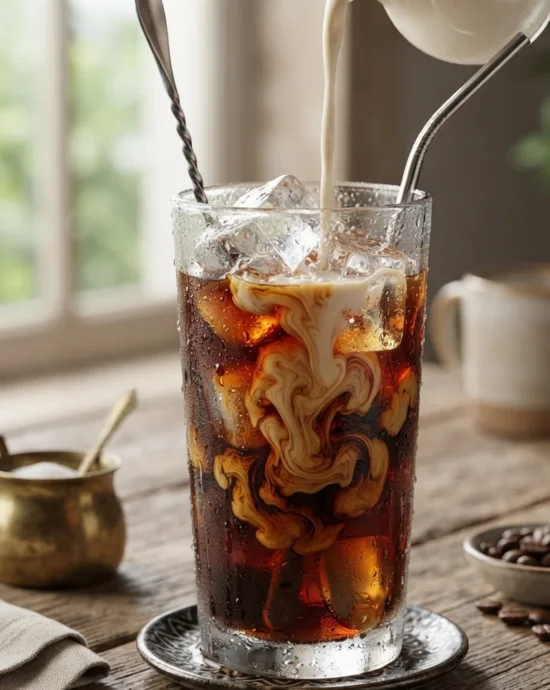
There is a specific, visceral magic in the first sip of a perfectly executed iced coffee on a sweltering afternoon. Imagine the condensation slicking the sides of a heavy crystal glass, the rhythmic ‘clink’ of oversized ice spheres, and that mesmerizing, marble-like swirl as a splash of heavy cream cascades through a mahogany-dark concentrate. This isn’t the watery, bitter remnant of a leftover morning pot; this is a culinary-grade cold brew, engineered for a silky mouthfeel and a complex flavor profile that dances between toasted chocolate, dark stone fruit, and a hint of molasses.
As an executive chef, I view coffee not just as a morning utility, but as a delicate extraction process. The heat-driven methods of traditional brewing often shock the bean, releasing volatile oils and acidic compounds that can mask the nuanced terroir of the coffee. By utilizing a cold-extraction method, we bypass the bitterness and unlock a natural sweetness that is both refreshing and sophisticated. This recipe is designed to provide you with a versatile concentrate—a liquid gold that serves as the foundation for everything from a minimalist black iced coffee to a decadent vanilla-infused treat.
The Story & Culinary Inspiration Behind This Dish
The history of cold-steeped coffee stretches back to 17th-century Kyoto, Japan, where ‘Kyoto-style’ coffee was brewed by slowly dripping water through coffee grounds over many hours. This method likely predates the modern obsession with cold brew and was potentially influenced by Dutch traders who needed a way to transport coffee that wouldn’t spoil or require a flame on wooden ships. Scientifically, the ‘cold brew’ phenomenon relies on time rather than temperature to dissolve the coffee’s flavor compounds. Because the bitter tannins and acidic oils are only soluble at high temperatures, the resulting cold-steeped liquid possesses a pH level significantly closer to neutral than hot-brewed coffee, making it a favorite for those with sensitive digestive systems and a palate for smooth finishes.
Why You'll Fall in Love with This Recipe
- Unrivaled Smoothness: The cold-steeping process eliminates 67% of the acidity found in hot-brewed coffee, resulting in a chocolatey, mellow flavor profile.
- Barista Efficiency: Prepare a large batch once and enjoy a premium caffeinated beverage every morning for an entire week with zero effort.
- Culinary Versatility: This concentrate serves as a base for cocktails, dessert affogatos, or high-protein coffee smoothies.
Health Benefits & Dietary Highlights
- Digestive Longevity: Lower acidity levels reduce the risk of acid reflux and gastric distress compared to traditional drip coffee.
- Metabolic Catalyst: High concentration of chlorogenic acids and caffeine may boost metabolic rate and enhance lipid oxidation.
- Antioxidant Powerhouse: Rich in hydrocinnamic acids and polyphenols that neutralize free radicals and support cellular health.
Key Ingredients & Smart Substitutions
- The Bean: Use a medium-to-dark roast with notes of chocolate or nut; look for 'Single Origin' from South or Central America for the best results.
- The Grind: A coarse, 'sea salt' texture is non-negotiable to prevent over-extraction and ensure a clean, sediment-free brew.
- The Water: Coffee is 98% water; use filtered or spring water to avoid chlorine or mineral taints that ruin delicate flavor notes.
Detailed Step-by-Step Cooking Walkthrough
- 1. Coarse Grind: Grind fresh beans to a very coarse consistency (similar to breadcrumbs) to allow slow, even saturation.
- 2. The Steep: Submerge grounds in filtered water at a 1:4 ratio and let sit at room temperature for 12-18 hours.
- 3. Precision Filtration: Strain through a fine-mesh sieve followed by a paper filter to remove all micro-sediment for a crystal-clear finish.
- 4. Dilute & Serve: Combine the resulting concentrate with water or milk and pour over fresh ice for the ultimate chill.
Critical Do's and Don'ts for Foolproof Success
- ✅ DO: Use Freshly Roasted Beans: Coffee reaches its peak flavor 7-14 days after roasting; avoid grocery store bins that have sat for months.
- ❌ DON'T: Over-steep Beyond 24 Hours: Steeping too long begins to extract woody, bitter flavors from the cellulose of the bean.
- ✅ DO: Use Coffee Ice Cubes: Freeze a small amount of coffee in ice trays to prevent your drink from becoming watered down as you sip.
- ❌ DON'T: Use a Fine Grind: Fine grounds will clog your filters and lead to an over-extracted, muddy, and bitter liquid.
How to Store, Freeze & Reheat Without Losing Quality
- Refrigeration: Store the concentrate in a sealed glass carafe or Mason jar for up to 10-14 days.
- Freezing: Freeze concentrate in ice cube trays for use in blended frappes or to chill hot coffee without dilution.
- Quality Tip: Keep the container tightly sealed; coffee absorbs odors from the fridge (like onions or garlic) very easily.
Delicious Serving Suggestions & Wine/Side Pairings
- Sweet Treats: Pairs beautifully with a sea-salt dark chocolate brownie or a classic almond croissant.
- Savory Brunch: Complement the richness with an avocado toast topped with chili flakes and a poached egg.
- Dairy Options: Try oat milk for a toasted cereal finish or a splash of heavy cream for a luxurious, silky texture.
Chef's Pro Secrets for Restaurant-Quality Flavor
- The Bloom: Pour just enough water to wet the grounds and wait 30 seconds before adding the rest; this releases trapped CO2 for better extraction.
- Dual Filtration: For a truly 'clean' cup, filter twice—once through metal to catch big bits, once through paper to catch oils and fines.
- Flavor Infusion: Add a cinnamon stick or a split vanilla bean to the steeping jar to infuse flavor directly into the concentrate.
Frequently Asked Questions (FAQ)
Why is my cold brew bitter?
Likely your grind was too fine or you steeped it for longer than 20 hours. Check your grinder settings.
Does cold brew have more caffeine?
Yes, because the coffee-to-water ratio is much higher than drip coffee. Dilution is key!
Should I steep it in the fridge or on the counter?
Room temperature (counter) is faster and extracts more complex flavors; fridge takes 24 hours but is more forgiving.