

- Cook the Sushi Rice
Rinse rice in cold water until water runs clear. Cook according to package instructions. Transfer warm rice to a wide wooden bowl (hangiri).
- Season the Rice
In a small bowl, whisk rice vinegar, sugar, and salt until dissolved. Sprinkle over warm rice and fold gently with a wooden paddle while fan-cooling the rice until glossy.
- Prep Fillings
Slice your sashimi-grade fish, avocado, and cucumber into uniform 1/4-inch thick matchstick strips.
- Assemble the Roll
Place a nori sheet shiny side down on a bamboo rolling mat. Spread 3/4 cup of seasoned rice evenly over the nori, leaving a 1-inch border at the top.
- Add Fillings & Roll
Arrange fish and vegetable strips in a neat line across the lower third of the rice. Lift the edge of the mat and roll firmly over the fillings, tucking as you go.
- Slice & Serve
Use a sharp, moistened knife to slice the roll into 6 to 8 even pieces. Serve immediately with soy sauce, wasabi, and pickled ginger.
- Calories:320 kcal
- Protein:14 g
- Total Fat:8 g
- Saturated Fat:1.5 g
- Cholesterol:20 mg
- Sodium:410 mg
- Potassium:340 mg
- Total Carbohydrates:48 g
- Dietary Fiber:4 g
- Sugars:5 g
- Calcium:30 mg
- Iron:1.8 mg
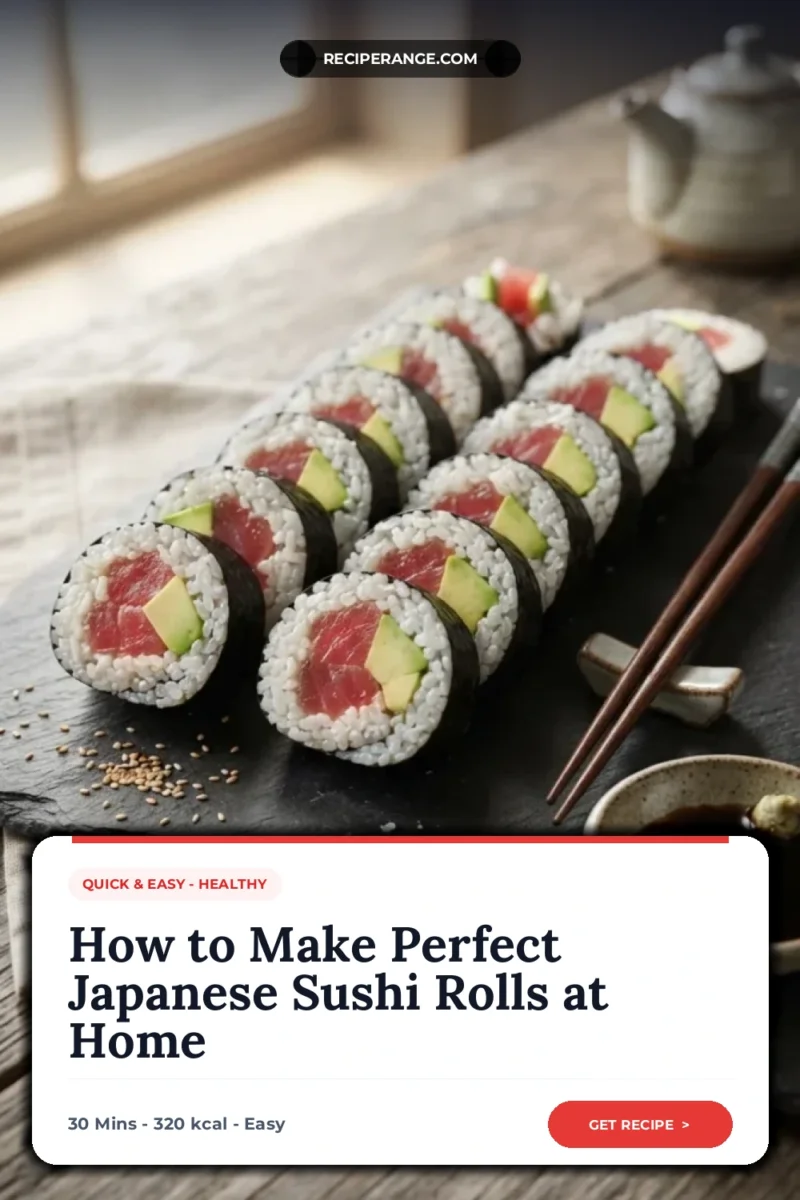
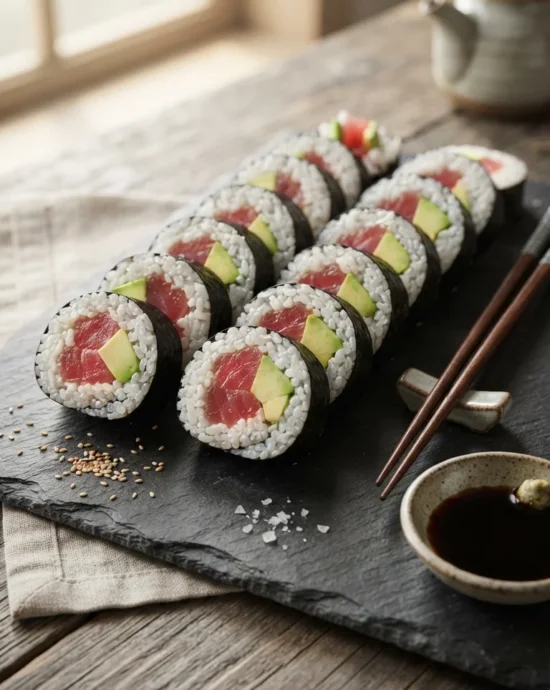
Step into the meticulous and meditative world of Japanese sushi making right in your own kitchen. The delicate aroma of seasoned short-grain rice mingling with the sharp, clean scent of toasted nori sets the stage for a culinary masterpiece. As your knife glides effortlessly through the polished roll, revealing vibrant ruby-red tuna and creamy emerald avocado, you will realize that making sushi is an art form accessible to everyone.
The Story & Culinary Inspiration Behind This Dish
Rooted in ancient preservation techniques across Southeast Asia, sushi evolved in Japan from fermented rice and fish to the fresh, refined delicacy we celebrate today. Edomae-style sushi popularized the quick assembly of fresh seafood over vinegared rice, transforming a street food snack into a global culinary icon driven by precision, balance, and reverence for fresh ingredients.
Why You'll Fall in Love with This Recipe
- Restaurant Quality: Achieve professional-grade sushi rolls with glossy, perfectly seasoned rice and neat cuts.
- Creative Control: Customize your fillings with your favorite sashimi-grade fish, vegetables, and creamy sauces.
- Mindful Cooking: Enjoy the rhythmic, therapeutic process of spreading rice, layering fillings, and rolling tightly.
Health Benefits & Dietary Highlights
- Omega-3 Fatty Acids: Packed with heart-healthy fats from fresh fish to support brain and cardiovascular function.
- Lean Protein & Minerals: Provides high-quality amino acids alongside essential iodine and trace minerals from sea vegetables.
- Balanced Energy: Combines easily digestible complex carbohydrates with clean proteins for sustained satiety.
Key Ingredients & Smart Substitutions
- Sushi Rice (Koshihikari): Short-grain Japanese rice providing the sticky starch necessary to hold rolls together.
- Nori Seaweed Sheets: Crisp, umami-rich dried seaweed that encases the fillings and rice.
- Fresh Fillings: Sashimi-grade fish, crisp cucumber, and creamy avocado for textural contrast.
Detailed Step-by-Step Cooking Walkthrough
- 1. Cook & Season Rice: Rinse rice until water runs clear, cook, then gently fold in warm seasoned sushi vinegar.
- 2. Prepare Ingredients: Slice fish, cucumber, and avocado into uniform, matchstick-length strips.
- 3. Assemble & Roll: Spread rice evenly over nori, add fillings, and roll tightly using a bamboo mat.
- 4. Slice & Serve: Use a razor-sharp, wet knife to slice into clean bite-sized pieces.
Critical Do's and Don'ts for Foolproof Success
- ✅ DO: Use a Wet Knife: Dip your knife blade in water and vinegar mix before every cut to prevent rice from sticking.
- ❌ DON'T: Crush the Rice: Always use a slicing, folding motion when seasoning rice to avoid mashing the grains.
- ✅ DO: Buy Sashimi-Grade Fish: Ensure your seafood is explicitly labeled for raw consumption from a trusted fishmonger.
- ❌ DON'T: Overfill the Roll: Keep fillings modest to prevent the nori from tearing and the roll from bursting open.
How to Store, Freeze & Reheat Without Losing Quality
- Refrigeration: Sushi is best consumed immediately. Store leftovers in an airtight container for up to 12 hours.
- Freezing: Do not freeze completed sushi rolls, as the rice becomes hard and unpalatable.
- Reheating: Sushi rolls are traditionally served cold or at room temperature and should not be reheated.
Delicious Serving Suggestions & Wine/Side Pairings
- Traditional Condiments: Serve with pickled ginger (gari), wasabi paste, and premium soy sauce.
- Warm Soups: Pair with a steaming bowl of traditional dashi-based miso soup.
- Beverage: Enjoy with chilled Japanese green tea (sencha) or crisp Junmai sake.
Chef's Pro Secrets for Restaurant-Quality Flavor
- Rice Temperature: Allow cooked sushi rice to cool to body temperature before spreading on nori to keep the seaweed crisp.
- Plastic Wrap Method: Cover your bamboo mat with plastic wrap when making inside-out (uramaki) rolls for easy cleanup.
- Blade Maintenance: Sharpen your yanagiba or chef's knife before starting for clean, professional cuts.
Frequently Asked Questions (FAQ)
Can I use regular long-grain rice?
No, short-grain Japanese rice has the specific starch content and stickiness required for sushi.
How do I keep the rice from sticking to my hands?
Keep a bowl of tezu (water mixed with a splash of rice vinegar) nearby to dip your fingers in.
Where can I buy sashimi-grade fish?
Purchase from a reputable Japanese market or high-end fishmonger who guarantees raw safety standards.