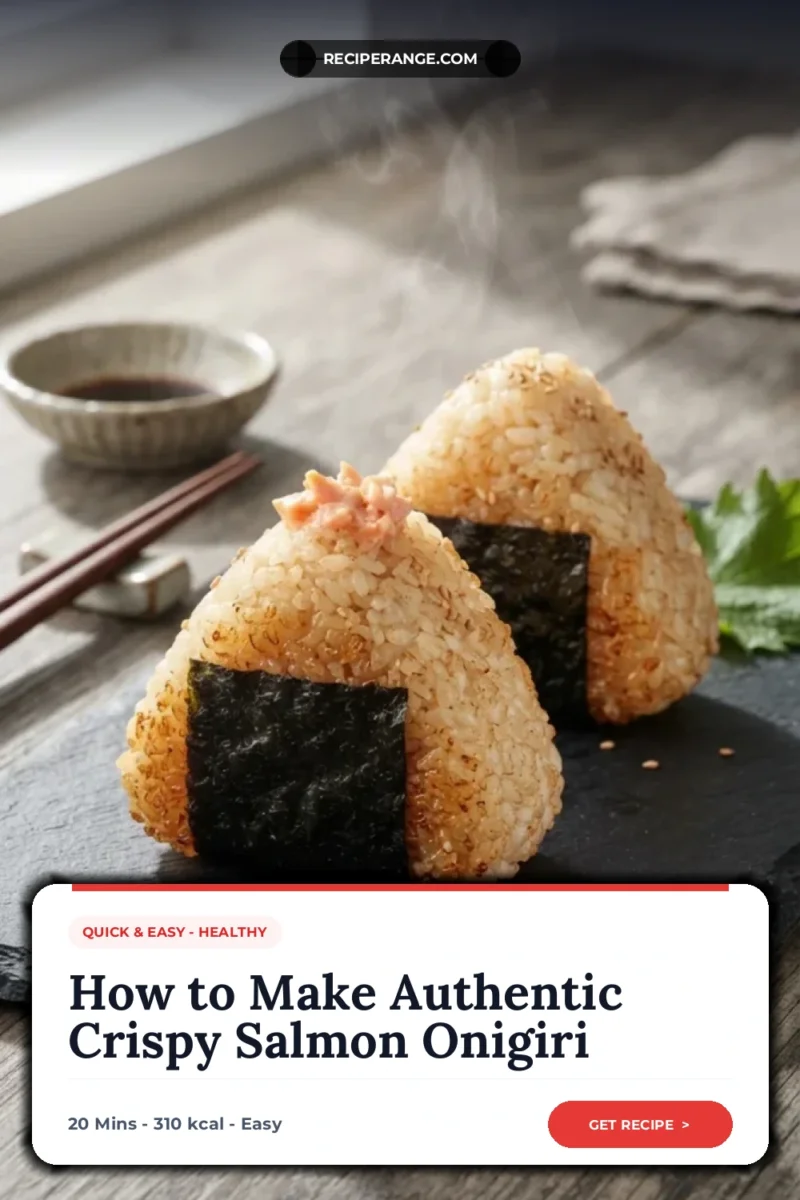

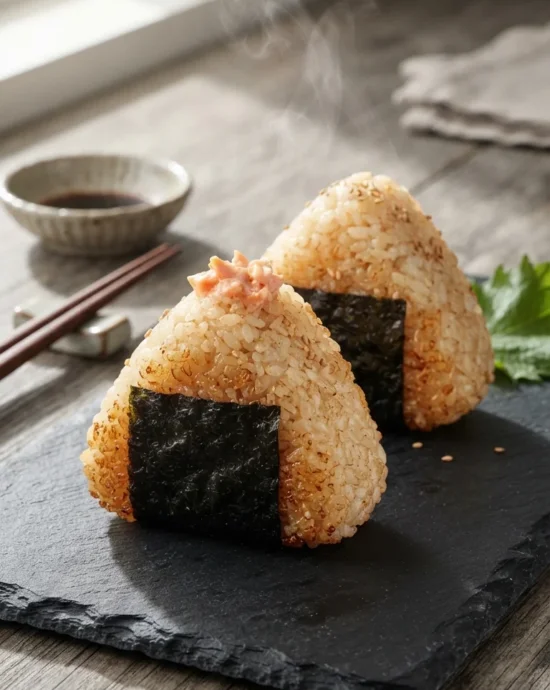

- Cook the Sushi Rice
Rinse short-grain rice in cold water until water runs clear. Combine rice and 2.25 cups water in a pot. Bring to a boil, cover, reduce heat to low, and simmer for 15 minutes. Remove from heat and let steam for 10 minutes. Gently fold in rice vinegar, sugar, and salt.
- Prepare Salmon Filling
Season salmon fillet with a pinch of salt and pepper. Pan-sear in a skillet over medium heat for 4 minutes per side until cooked through. Flake the salmon with a fork and mix with soy sauce and sesame oil.
- Shape the Onigiri
Wet your hands with salted water (te-shio). Place a half-cup of warm rice in your palm, make an indentation in the center, and add 1 tablespoon of flaky salmon. Cover with a little more rice.
- Form Triangles
Cup your hands to form a triangle, gently pressing the rice together to secure the shape while keeping it light. Repeat for remaining ingredients.
- Wrap and Serve
Wrap the base of each onigiri with a strip of crisp nori seaweed. Sprinkle with furikake and serve warm.
- Calories:310 kcal
- Protein:14 g
- Total Fat:6 g
- Saturated Fat:1 g
- Cholesterol:25 mg
- Sodium:420 mg
- Potassium:210 mg
- Total Carbohydrates:50 g
- Dietary Fiber:2 g
- Sugars:3 g
- Calcium:30 mg
- Iron:1.5 mg
There is a quiet, meditative magic to shaping warm, steamy Japanese rice with your bare hands. As you press the grains together, the subtle aroma of toasted nori and seasoned sushi rice fills the kitchen, instantly transporting you to a bustling Tokyo konbini on a crisp autumn morning. The secret lies in the contrast: a gently crisped exterior wrapper holding a soft, perfectly seasoned core of succulent flaky fish.
Why You'll Fall in Love with This Recipe
- Textural Symphony: Crispy pan-fried exterior shell meets pillowy soft sushi rice and savory fish.
- Portable & Practical: Stays delicious at room temperature, making it the ultimate lunchbox addition.
- Authentic Flavor: Elevated with traditional seasonings, furikake, and umami-rich fillings.
Health Benefits & Dietary Highlights
- Clean Carbohydrates: Short-grain Japanese rice provides easily digestible, sustained energy for daily activities.
- Omega-3 Fatty Acids: Wild-caught salmon filling delivers vital heart-healthy fats and essential amino acids.
- Mineral-Rich Nori: Seaweed wrapper is packed with iodine, iron, and trace minerals to support thyroid health.
Key Ingredients & Smart Substitutions
- Short-Grain Japanese Rice: Essential for its sticky starch content which holds the onigiri shape together.
- Fresh Salmon Fillet: Provides a rich, flaky protein core; sub with salted tuna or pickled umeboshi.
- Nori Seaweed Strips: Adds a crisp, briny contrast and serves as a convenient handle for eating.
Detailed Step-by-Step Cooking Walkthrough
- 1. Cook Sushi Rice: Rinse short-grain rice until water runs clear, then steam and season with seasoned rice vinegar.
- 2. Prepare Salmon Filling: Bake or pan-sear seasoned salmon until flaky, then shred and mix with a touch of soy sauce and sesame oil.
- 3. Shape with Salty Hands: Wet hands with salt water (te-shio) to prevent sticking, press rice around the filling, and form triangles.
- 4. Sear & Wrap: Optionally pan-fry for a golden crust, wrap with crisp nori sheets, and serve warm.
Critical Do's and Don'ts for Foolproof Success
- ✅ DO: Use Te-Shio (Salt Water): Always wet your hands with salted water before shaping to season the exterior and prevent sticking.
- ❌ DON'T: Squeeze Too Hard: Compact the rice gently; crushing the grains ruins the light, airy texture of authentic onigiri.
- ✅ DO: Let Rice Cool Slightly: Allow cooked rice to cool just enough to handle comfortably before shaping.
- ❌ DON'T: Skip the Rice Rinse: Always wash raw rice thoroughly to remove excess surface starch for optimal texture.
How to Store, Freeze & Reheat Without Losing Quality
- Refrigeration: Wrap individually in plastic wrap and store in the fridge for up to 2 days (note: rice may firm up).
- Freezing: Wrap tightly without nori in plastic wrap and freeze for up to 1 month.
- Reheating: Microwave wrapped onigiri for 45-60 seconds on medium power until warm and soft.
Delicious Serving Suggestions & Wine/Side Pairings
- Soups: Traditional hot miso soup with tofu and scallions.
- Pickles: Crunchy Japanese tsukemono or pickled daikon radish.
- Beverage: Hot steaming green tea (Sencha or Matcha).
Chef's Pro Secrets for Restaurant-Quality Flavor
- Rice Quality: Always use authentic Japanese short-grain rice (Koshihikari is ideal).
- Crispy Crust: Brush the shaped rice balls with a mix of soy sauce and mirin before searing in a hot skillet.
- Nori Timing: Wrap with nori right before eating if you want it crisp, or wrap ahead if you prefer it soft.
Frequently Asked Questions (FAQ)
Can I use jasmine or basmati rice?
No, long-grain rices lack the necessary stickiness and starch to hold the triangular shape of onigiri.
How do I prevent the rice from sticking to my hands?
Keep a bowl of water mixed with a pinch of salt nearby to wet your hands frequently.
Can I make onigiri without a filling?
Yes! Salted plain rice balls mixed with furikake seasoning are traditional and delicious.