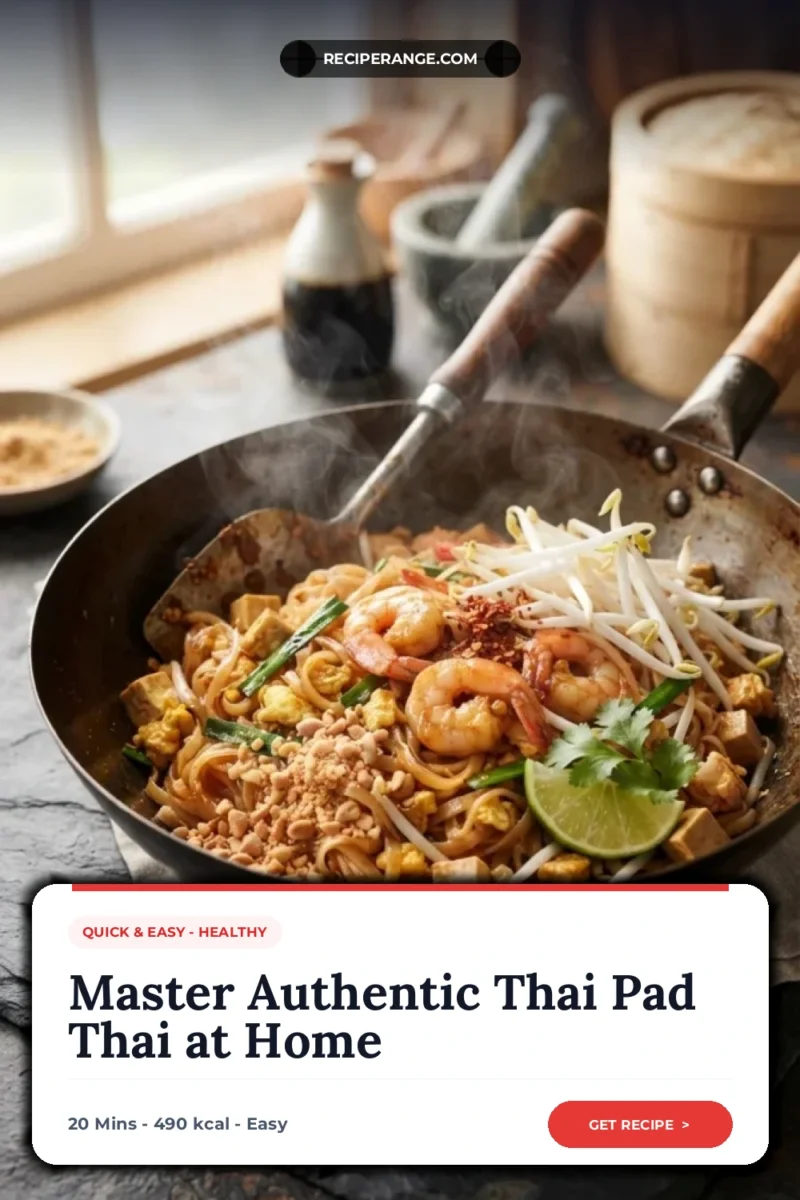

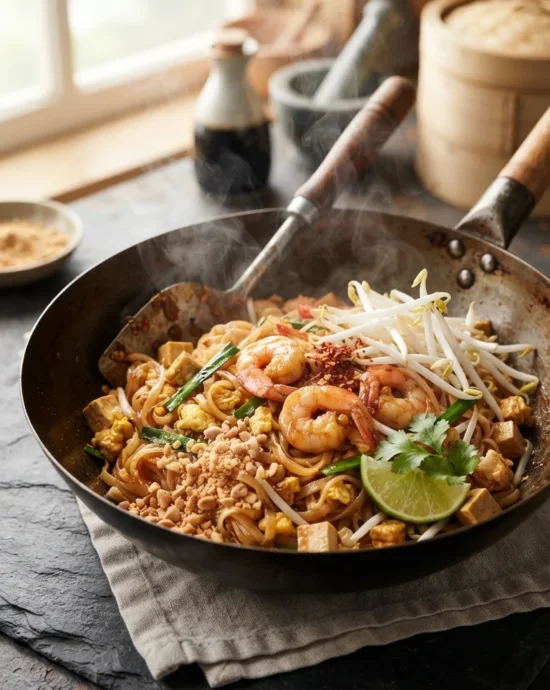

- Soak the Noodles
Submerge flat rice noodles in lukewarm water for 30 to 45 minutes until soft and pliable, but still chewy with a firm core. Drain thoroughly.
- Prepare the Sauce
In a small mixing bowl, whisk together tamarind paste, fish sauce, grated palm sugar, and warm water until the sugar dissolves completely into a balanced sour-sweet-salty sauce.
- Sear Tofu and Shrimp
Heat 1.5 tablespoons of vegetable oil in a wok over medium-high heat. Add diced tofu and sear until golden and crisp on all sides (3-4 minutes). Remove and set aside. In the same wok, flash-sear the shrimp until pink and opaque (2 minutes), then remove and set aside with the tofu.
- Aromatics and Eggs
Add remaining oil to the wok over high heat. Add minced garlic and diced shallots, stirring rapidly for 30 seconds until fragrant. Push aromatics to the side, crack eggs directly into the empty space, and scramble softly with a spatula until just set.
- Toss Noodles and Sauce
Add drained noodles and the prepared tamarind sauce directly into the wok. Toss vigorously over high heat for 2-3 minutes until the noodles absorb all the liquid and turn uniformly translucent and tender.
- Final Assembly
Return cooked shrimp and tofu to the wok along with half of the bean sprouts and all the garlic chives. Toss everything together for 30 seconds. Plate immediately and garnish with remaining fresh bean sprouts, crushed peanuts, and lime wedges.
- Calories:490 kcal
- Protein:24 g
- Total Fat:16 g
- Saturated Fat:2.5 g
- Cholesterol:145 mg
- Sodium:920 mg
- Potassium:310 mg
- Total Carbohydrates:62 g
- Dietary Fiber:3 g
- Sugars:14 g
- Calcium:95 mg
- Iron:3.1 mg
Step into your kitchen and let the intoxicating aroma of sizzling garlic, caramelized palm sugar, and pungent fish sauce transport you straight to the bustling night markets of Bangkok. There is an unmistakable symphony of sounds when making authentic Pad Thai—the gentle hiss of soaked rice noodles hitting a screaming-hot wok, the rhythmic clatter of a wooden spatula, and the vibrant crunch of fresh bean sprouts tossed in at the final second. This dish is a sensory masterclass, balancing sweet, sour, salty, and spicy notes on your palate with every single bite.
Crafting the ultimate Pad Thai isn’t about dumping heavy commercial peanut sauces over overcooked spaghetti; it is a delicate dance of timing and traditional technique. As the wok breathes fire beneath your ingredients, the tamarind paste creates a bright, mouth-puckering foundation that mellows into a rich, savory coating. Garnished with crushed roasted peanuts, fresh lime wedges, and crisp garlic chives, every forkful offers a dynamic contrast of textures that makes this street food icon universally adored.
Whether you are hosting a festive weekend dinner party or satisfying a sudden weeknight craving for authentic Asian cuisine, this guide will elevate your stir-frying game. Say goodbye to soggy, takeout noodles forever and embrace the art of high-heat wok cooking right in your own home.
The Story & Culinary Inspiration Behind This Dish
Pad Thai’s modern iteration was famously popularized in Thailand during the 1930s as part of a national modernization and nation-building campaign led by Prime Minister Plaek Phibunsongkhram. Seeking to reduce domestic rice consumption during a shortage and promote Thai nationalism, the government championed rice noodles combined with affordable, locally accessible proteins and vibrant pantry staples. Rooted in traditional Chinese stir-fry techniques combined with distinct Southeast Asian flavor profiles, Pad Thai has since evolved into the undisputed king of Thai street food worldwide.
Why You'll Fall in Love with This Recipe
- Unrivaled Flavor Balance: A harmonious interplay of tamarind tang, palm sugar sweetness, and savory fish sauce.
- Perfect Texture: Chewy rice noodles that absorb the rich sauce without turning mushy or clumped.
- Street Food Authenticity: Brings the genuine taste and high-heat wok aroma of Bangkok straight to your table.
Health Benefits & Dietary Highlights
- Quality Lean Protein: Packed with fresh shrimp and firm tofu to support muscle repair and sustained energy.
- Gluten-Free Carbohydrates: Traditional rice noodles offer an easily digestible energy source free from wheat gluten.
- Nutrient-Dense Garnishes: Finished with vitamin-rich bean sprouts, lime juice, and heart-healthy crushed peanuts.
Key Ingredients & Smart Substitutions
- Flat Rice Noodles: The starchy foundation; must be soaked in warm water, never boiled, to retain structural integrity.
- Tamarind Paste: Provides the essential, unmistakable sour backbone that distinguishes authentic Pad Thai.
- Aromatics & Proteins: Firm tofu, fresh shrimp, garlic, shallots, and preserved radish create deep savory layers.
Detailed Step-by-Step Cooking Walkthrough
- 1. Soak the Noodles: Rehydrate flat rice noodles in lukewarm water until pliable yet firm to the bite.
- 2. Mix the Sauce: Whisk tamarind paste, fish sauce, palm sugar, and water until fully emulsified.
- 3. Sear Proteins: Flash-cook shrimp and golden-brown tofu cubes in a smoking hot wok, then set aside.
- 4. Toss and Serve: Stir-fry noodles with sauce, fold in proteins and fresh sprouts, and garnish generously.
Critical Do's and Don'ts for Foolproof Success
- ✅ DO: Soak Noodles Correctly: Use warm water to soften noodles gently; boiling will cause them to break and turn gummy.
- ❌ DON'T: Overcrowd the Wok: Cook in small batches or ensure high heat so ingredients sear rather than steam.
- ✅ DO: Prepare All Ingredients First: Mise en place is crucial because actual cooking happens in under three minutes.
- ❌ DON'T: Skip the Tamarind: Never substitute lemon or vinegar; tamarind provides the authentic sour depth.
How to Store, Freeze & Reheat Without Losing Quality
- Refrigeration: Store leftover Pad Thai in an airtight container for up to 2 days. Note that noodles will continue to absorb moisture.
- Freezing: Not recommended; rice noodles lose their springy texture and become unpleasantly spongy upon thawing.
- Reheating: Reheat in a hot skillet with 1 tablespoon of water over medium-high heat, tossing constantly until steaming.
Delicious Serving Suggestions & Wine/Side Pairings
- Fresh Sides: Crisp cucumber salad dressed with rice vinegar and crushed chili flakes.
- Warm Soups: Light and fragrant Tom Yum or clear vegetable broth with lemongrass.
- Beverage: Iced Thai milk tea or crisp sparkling water with a heavy squeeze of fresh lime.
Chef's Pro Secrets for Restaurant-Quality Flavor
- Wok Heat: Get your carbon steel wok screaming hot before adding oil for that smoky wok hei flavor.
- Noodle Test: Your noodles are ready for the wok when you can bend them into a gentle C-shape without breaking.
- Peanut Quality: Roast raw peanuts yourself and crush them coarsely right before serving for maximum aromatic punch.
Frequently Asked Questions (FAQ)
Can I make this vegetarian?
Yes! Omit the shrimp, use extra firm tofu, and substitute vegan mushroom stir-fry sauce or soy sauce for fish sauce.
Why are my noodles mushy?
You likely soaked them in boiling water or overcooked them in the wok. Soak only in lukewarm water until just pliable.
Where do I find tamarind paste?
Look for pure tamarind paste or concentrate in Asian grocery stores or the international aisle of major supermarkets.